1966 Douro Valley: A Year When the River Taught the Vines to Remember
Discover the 1966 Douro Valley vintage: a classically structured year of dark fruit, fine tannins, and long aging potential. Learn how its growing season shaped the wines, which producers excelled, and whether to drink or hold bottles today.

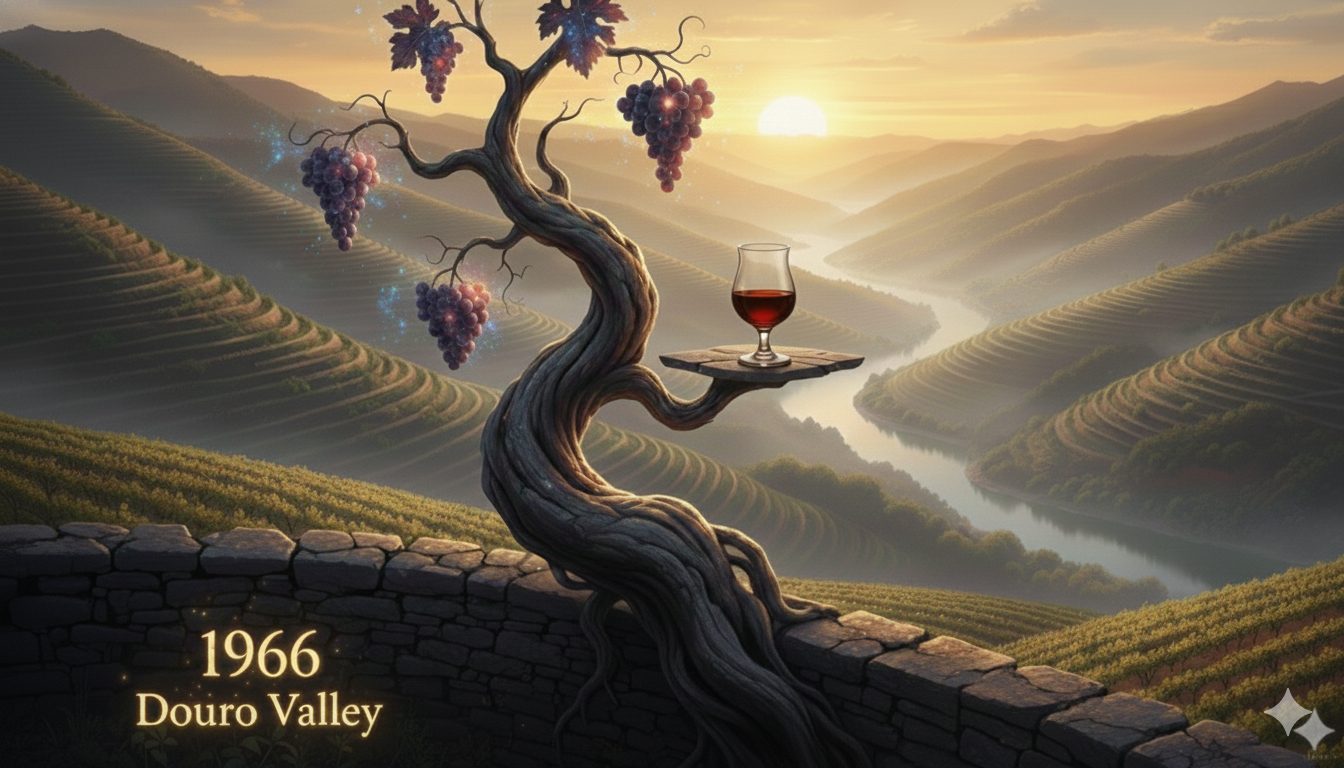
Black plum resting on sun-worn schist—can a vintage shaped by intensity still speak with such quiet clarity?
The Season's Quiet Alchemy: Schist, Sun, and the River's Breath
The Douro Valley 1966 vintage was a year where nature wrote a story of profound structural definition. It began with normal winter rains, ensuring deep soil reserves after a dry spring. A steady spring was followed by a warm, dry Douro summer where the schist terraces, absorbing the sun, pushed the grapes to concentration. The vintage's structural grace benefited from the dramatic diurnal shift in September. This long, selective harvest, focusing on the small, thick-skinned berries of a concentrated crop, yielded extremely high-quality fruit. In 1966 the valley held its breath, and the vines answered with fruit that seemed to remember every shift of light.
The Structure's Pledge: Architecture Built for Long Memory
Is 1966 Douro Valley worth aging? Unequivocally yes. This year stands as one of the great classical Port vintages, renowned for its profound structure, purity, and longevity. It achieved a rare structural balance: deep, concentrated fruit anchored by firm, abundant tannin and beautifully preserved acidity. Unlike many richer vintages, 1966 carries its power with a disciplined focus. The spine of this architecture is a promise: the finest, well-stored bottles continue their patient unfolding, offering thrilling serenity where others have faded.
How the Wines Taste: Shadow, Silk, and the Iron Echo
To taste 1966 now is to experience the deep clarity time leaves behind. The core profile speaks of dark, concentrated memory: black plum, dried fig skin, and dark cherry, layered with cocoa, fennel, the heat of warm stone, and dried thyme. The texture is both deep and lifted, starting with a cool entry. The sweetness is beautifully held in balance, carried by tannins that are now fine-grained but still retain their firm authority. The long, saline, mineral close lingers on the palate like the memory of light. I once tasted a 1966 Port on a quiet Quinta terrace—the fruit rising with the evening light as if the stones themselves exhaled.
Sub-Region Snapshot: The Slopes' Recollection of Light
In 1966, each hillside carried its own recollection of the season, a different way of holding fruit and memory. The Cima Corgo, the heartland of Port, delivered the core structural power, yielding wines destined to be structured and long-lived. The Baixo Corgo, closer to the Atlantic's tempering breath, offered cooler, more aromatic wines that achieved earlier charm. The Douro Superior, vast and continental, produced concentrated, powerful wines with the longest horizon. The valley's dramatic topography—schist soils, high altitude, and proximity to the Douro River—magnified the vintage's structural precision.
Style Spectrum: Foot-Treading and the Patience of Stone
The style of 1966 was forged by human precision and the limits of the time. The wines began in granite lagares (shallow stone vats) with traditional foot-treading, relying on human presence to achieve optimal tannin extraction. The process was swift: rapid fermentation was arrested by the addition of high-proof grape spirit. Aging occurred in large casks, typically in the cool, stable environment of Vila Nova de Gaia. The core challenge was tannin extraction, achieved through human precision rather than technology. The lagares, carved into stone generations before, shaped the vintage with the patience of people who knew how slowly beauty settles in the Douro.
Producer Call-Outs: Monuments to Patience and Memory
The best producers 1966 Douro Valley crafted wines that became pillars of the modern Port era.
- Icons: Taylor’s, Fonseca, Graham’s, Dow’s, and Warre’s all produced wines of immense power and structure, defining the year's gravitas. Niepoort bottled a singular elegance and finesse.
- Value Plays: Smith Woodhouse and Cockburn ('66 was a strong outing) offer superb, classically structured examples that are profoundly rewarding now. Noval (the non-Nacional) provided depth and focus.
- Wild Cards: Seek out the lesser-known Quintas that bottled the year’s concentration, offering quiet brilliance away from the big houses.
These bottles now move with the calm of long-kept stories.
Drink-or-Hold Scorecard: The Final Plateau of Clarity
What remains now is not youthful richness, but the kind of clarity time leaves behind.
- Early Glow (Now–2035): Most of these treasures now rest in a state of soft, graceful maturity, their youthful fruit having softened into tertiary murmurs of cocoa, resin, and autumnal spice.
- Sweet Spot (1985–2020): The period of perfect interplay, when fruit, resin, and structural spice danced in supreme harmony. Many bottles still linger here, offering their highest point of aromatic complexity.
- Marathon (2036+): The profound icons and top houses are still evolving into dried-fruit, tobacco, and pure mineral clarity, their structural spine ensuring quiet endurance.
Final Reflection
The 1966 Douro Valley vintage stands as one of the region's enduring pillars, a year when deep fruit met perfect, resolute structure. It is a masterpiece built for long memory, where the sun-warmed schist yielded wines defined by crystalline clarity and profound, patient beauty. The structural tension—forged by firm tannin and preserved acidity—ensures the wine's serene evolution, allowing its story to unfold across the generations. This vintage is the Douro's finest distillation: a quiet monument of power, where structure, having learned patience from the river, moves serenely toward its timeless horizon.