1989 Rhône Valley: The Sun That Refused to Fade
1989 Rhône Valley is a benchmark vintage: hot, dry, yet remarkably balanced. Explore how Northern Syrah and Southern Grenache achieved depth without excess, which appellations and producers excelled, and which bottles are still worth cellaring or opening today.

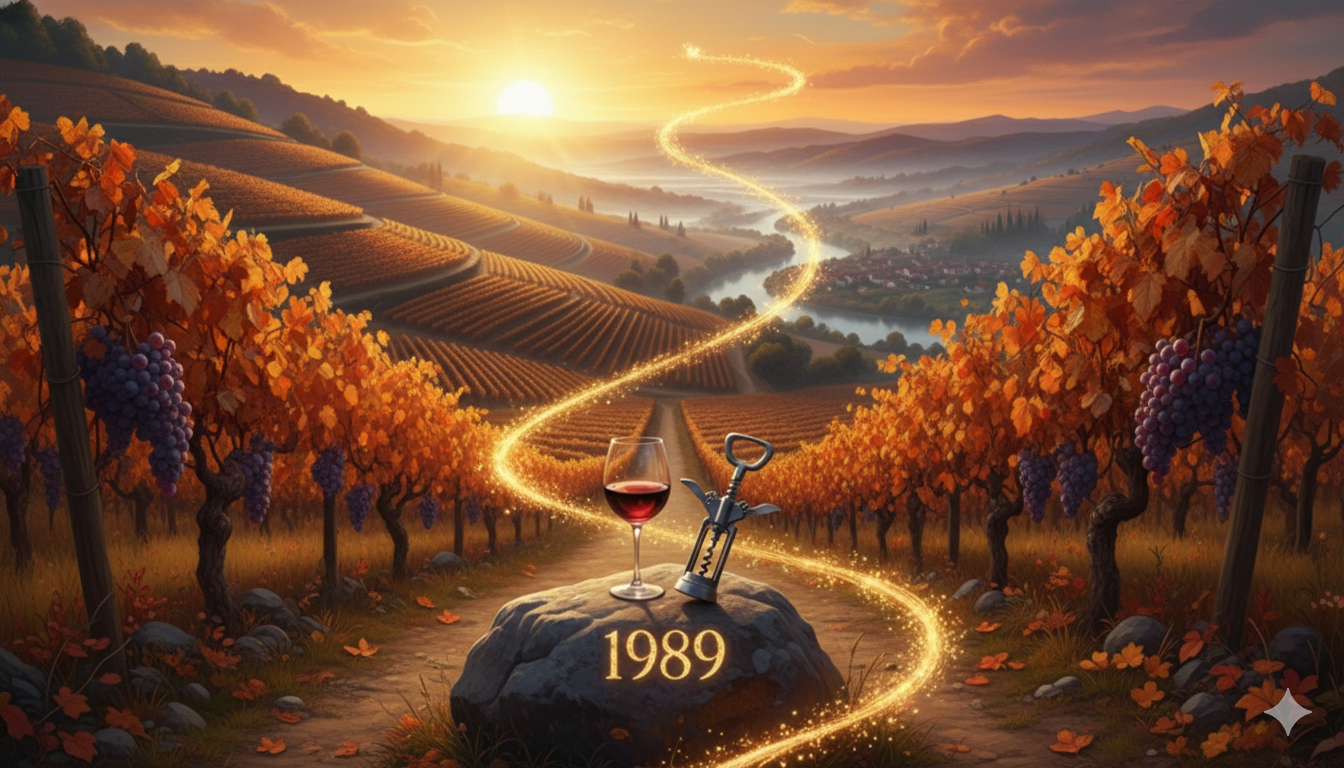
Black pepper, thyme, and dust in warm wind—can generosity ever stay this disciplined, or must the light always consume the shadow?
The Season's Quiet Alchemy: Wind, Light, and Concentration
The Rhône Valley 1989 vintage unfolded across both banks with rare, golden consistency. The year began with a mild, dry winter in the South, with a wet April that built crucial water reserves. This was followed by a consistently warm, drought-marked summer that pushed the vines to their limit. Crucially, the region’s fierce north winds (Mistral in the South, Bise in the North) helped keep disease at bay and concentrated the pure fruit. The vines, naturally stressed, yielded small berries with thick skins, leading to immense concentration and perfectly ripe tannins. The sun lingered too long, yet the Rhône remembered how to breathe.
The Structure's Pledge: Warmth Carried by Mineral Clarity
Is 1989 Rhône Valley worth aging? Unequivocally yes. This vintage is viewed as a seminal landmark, often partnered with the louder 1990 but possessing a subtler, more defined structure. It delivered power that rarely overcooked at the top end—a rare equilibrium of Mediterranean warmth and structural restraint. Its backbone of acidity and mineral clarity still carries the warmth of the year in perfect tension, allowing the best bottles to evolve into tertiary calm while retaining essential vitality.
How the Wines Taste: Dusk Over Limestone
The wines move like dusk over limestone—slow, complete, inevitable. In the Northern Rhône, Syrah speaks of cassis, olive tapenade, violet, cool smoked meat, and the deep stillness of graphite. In the Southern Rhône, Grenache blends offer rich garrigue, dried fig, warm plum, bay leaf, and red earth. The texture is defined by paradox: a silky entry leads to a structured, focused mid-palate and a long, savory mineral finish. The warm vintage imprint is undeniable—ripe fruit perfectly wrapped in mineral precision. I remember a Hermitage tasted under dim light, its scent of iron and thyme still haunting decades later.
Appellation Snapshot: The Slopes' Sunlight Dialect
From granite to clay, each slope held its own dialect of sunlight in 1989. In the North, Côte-Rôtie achieved perfect Syrah ripeness with elevated finesse: Côte Blonde was highly perfumed, while Côte Brune delivered power. Hermitage wines were monuments, defined by an iron-core structure built for decades. Cornas was dense and ferrous, a bastion of patience. Saint-Joseph and Crozes-Hermitage became the vibrant, pure value stars of the North. In the South, Châteauneuf-du-Pape was voluptuous, delivering sweet-spiced Grenache lifted by crystalline garrigue perfume. Gigondas and Vacqueyras offered rustic charm and concentrated warmth, while Lirac and Cairanne provided quiet brilliance and finely balanced structure.
Style Spectrum: Foudre's Cradle and Minimal Intervention
The mastery of 1989 lay in its traditional, unhurried cellar practices. Fermentations were conducted in large vats, relying on gentle extraction and hand punch-downs to harness color and tannin without coarseness. Most traditional producers used large vats and old foudres, demonstrating a faith in the fruit’s intrinsic structure. Total aging spanned 18–24 months. Minimal intervention allowed the clarity of the vintage to shine, though some icons like Guigal’s single-vineyard Côte-Rôties were already seeing very long ageing in 100% new oak. In the South, Grenache and Mourvèdre achieved full, complex maturity without excess heat; in the North, Syrah retained poise and aromatic freshness. Alcohol levels were typically moderate, 13–14%, carried by beautifully balanced acidity and ripe, defined tannins. 1989 taught that patience—not innovation—was the true measure of mastery.
Producer Call-Outs: Monuments to Patience and Memory
The best producers 1989 Rhône Valley bottled a grandeur that still hums in the memory of the valley.
- Icons. Guigal (La Mouline, La Landonne, La Turque) crafted dense, age-worthy wines that feel like liquid time. Jaboulet (La Chapelle) delivered monumental expression. Chapoutier, Clape, and Chave provided Hermitage of exceptional structure. Beaucastel, Rayas, and Vieux Télégraphe captured the sweet-spiced concentration of Châteauneuf-du-Pape.
- Value plays. Ferraton, Font de Michelle, and Clos du Mont-Olivet offer wines that are still elegant and honestly expressive of the vintage’s warmth. (Charvin’s estate bottling begins in 1990.)
- Wild cards. Thierry Allemand (Cornas), Pegau (Châteauneuf-du-Pape), and Les Pallières (Gigondas) succeeded in capturing the untamed, mineral side of the heat, offering complexity beyond the usual categories.
These wines aged like memories—quieter, rounder, more luminous with time.
Drink-or-Hold Scorecard: The Final Plateau of Calm
The 1989 vintage demands reverence, offering decades of serene tertiary evolution.
- Early Glow (Now–2030): Most wines are fully mature, their primary fruit softened into spice and leather. They are beautiful now, but require careful handling.
- Sweet Spot (1995–2015): The optimal window when fruit and structure achieved perfect harmony. While past, many well-stored bottles still linger here, offering supreme elegance.
- Marathon (2031+): The top Côte-Rôtie, Hermitage, and structured Châteauneuf are still alive, showing ancient calm and complexity. Decant gently; let the sediment rest like memory settling into silence.
Final Reflection
The 1989 Rhône Valley vintage achieved a rare, luminous grace, successfully balancing the sun's intense heat with profound, structural clarity. This was a year where power met stillness, forging wines that carry immense concentration yet move with quiet poise across the palate. The resulting tension, carried by persistent acidity and mineral clarity, ensures its warmth will endure and transform with time. Ultimately, 1989 stands as a benchmark vintage, proving that the true measure of Rhône grandeur lies in its ability to shine without ever needing to shout.