Mendoza 2010 — The Altitude That Stilled the Heat
Explore Mendoza’s 2010 vintage, where Andean altitude, cool nights and a cooler-than-average season forged Malbec with rare balance: dark fruit, violet, mineral tension and fine tannins. A vintage that trades sheer power for clarity, precision and quietly confident longevity.

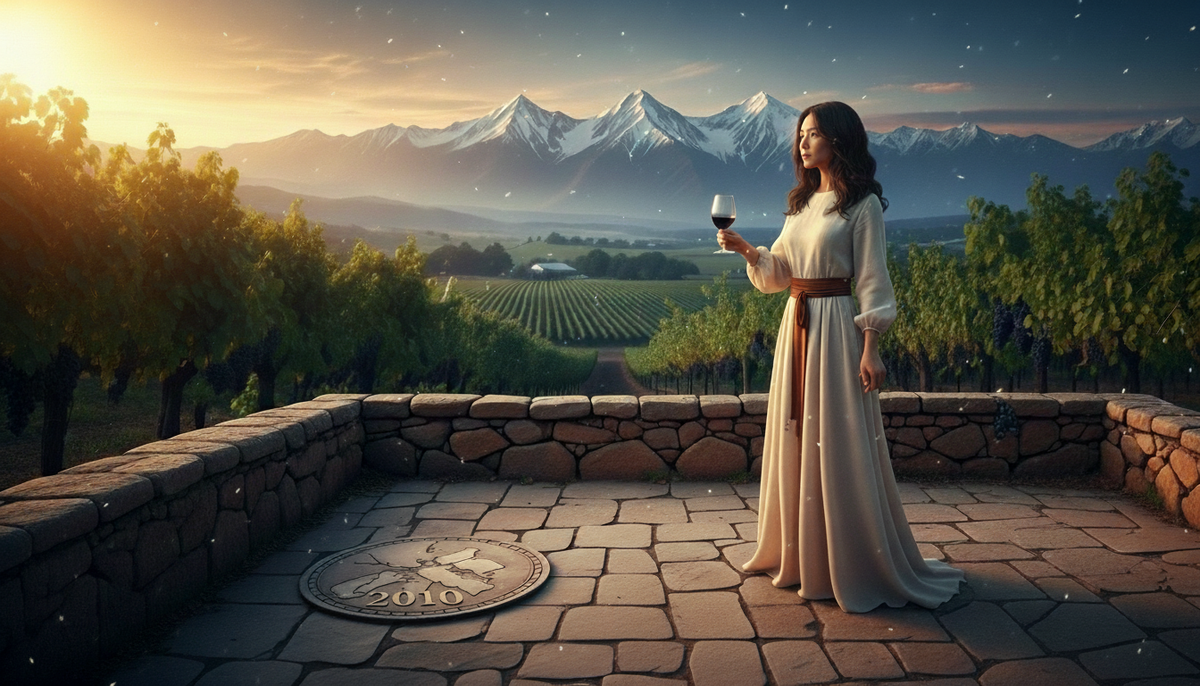
Black plum and violet in mountain air—can altitude truly teach warmth to move slower, or is slowness merely the trick of perspective?
The Season's Quiet Alchemy: Altitude, Light, and Cool Nights
The Mendoza 2010 vintage was a textbook year for purity. It began with a necessary cold, wet winter, which built deep soil reserves. This set the stage for an even spring and a bright, moderate summer spent under the sharp, unfiltered Andean sun. Crucially, the vines benefited from intensely cool nights above 900–1,500 m. This thermal amplitude slowed ripening to a meditative pace, preserving crucial acidity and aromatic precision. The season was marked by relatively cool, dry conditions and culminated in a healthy, late harvest. The mountains held their breath, and the fruit learned to listen.
The Structure's Pledge: Discipline of the High Frontier
Is 2010 Mendoza worth aging? Unequivocally yes. This vintage stands as one of the modern benchmarks because it achieved a tension of structure and transparency that helped define the decade’s shift toward balance. It perfectly balances the generosity of ripeness with the cool, crystalline mineral freshness granted by altitude. Positioned gracefully between the plush warmth of 2009 and the firmer, more angular structure of 2011, 2010 proved that balance, not brawn, defines the future of Malbec. Its altitude-driven acidity and fine tannin have carried its deep fruit into quiet longevity.
Decoding the Glass: Mountain Heart Under Velvet Dust
To taste 2010 is to breathe the high air of the Andes itself. The sensory profile is dark and precise: black cherry, clean plum skin, blueberry, and vivid violet, layered beneath notes of cocoa, graphite, and the wild spice of dried mountain herbs. The texture is defined by altitude: a chilling cool entry gives way to a silken mid-palate, finishing with granular tannins and a bracing, saline, mineral echo. The precision achieved here is rare for warm-region reds. Malbec stands tall here—broad-shouldered but soft-spoken, a mountain heart under velvet dust. This wine hums with latent energy. I can still smell that desert rain, cooling the vines before harvest.
Regional Snapshot: The Elevation Mosaic in Dialogue
The 2010 vintage brought Mendoza's complex elevation mosaic into brilliant focus. Luján de Cuyo (900–1,100 m) offered the valley's established heart: deep alluvial soils of clay and stones, with pockets of limestone influence, yielded wines of plush fruit and cedar warmth. Maipú provided classic, earth-anchored wines with structured, black-fruited depth. The Uco Valley—the high frontier (1,100–1,500 m)—showcased its potential: limestone and river stones delivered tension, ethereal perfume, and stony elegance. In 2010, the Uco Valley's cool precision and Luján’s layered ripeness were finally in true dialogue. The Andes kept time; each slope answered in its own language of light.
Style Spectrum: Altitude as Teacher of Patience
The defining choices of 2010 marked a turning point toward structural restraint and site expression. Winemakers utilized careful hand harvest and cold soak before fermentation in small tanks or, increasingly, concrete vessels. The best wines were aged 12–24 months in French oak, with modest to ambitious new oak (typically 20–100% depending on the cuvée) to frame the fruit. While alcohol generally sat around 14–15%, the true structural engine was the high, preserved acidity, supported by firm yet polished tannins. Winemakers learned that altitude is its own teacher; it shapes patience as much as structure.
Producer Call-Outs: Treating Malbec as a Mirror
The best producers Mendoza 2010 treated the vintage as a chance to capture the specific clarity of their site, not simply the grape.
- Icons: Catena Zapata Adrianna Vineyard captured the pristine, high-altitude energy. Achával-Ferrer (Altamira, Bella Vista) delivered single-vineyard complexity. Cheval des Andes exemplified Malbec-Cabernet finesse. Pulenta Estate and Mendel showed deep concentration and balance. Zuccardi underscored the Uco Valley's future.
- Value plays: Altos Las Hormigas provided clear, vibrant expressions of Malbec. Luigi Bosca and Trapiche Terroir Series offered reliably structured wines. Nieto Senetiner captured accessible depth.
- Wild cards: Matias Riccitelli, Durigutti, SuperUco, and PerSe Wines—these producers pushed the boundaries, bottling a striking altitude transparency and finesse that hinted at the region's diverse future.
These were the first to treat Malbec not as a monument, but as a mirror.
Outside Mendoza, Patagonian producer Bodega Noemia offered a cool-climate southern counterpoint, showing how Malbec behaves at much lower latitudes and temperatures.
Drink-or-Hold Scorecard: High-Resolution Longevity
The 2010 vintage offers a long, high-resolution arc, built for rewarding patience.
- Sweet Spot (Now–2030): The wines are currently entering or in their maturity phase. Expect complexity to deepen—cocoa, tobacco leaf, violet, and wet stone emerge. Tannins should show a near-silken resolve. Wines from the valley floor and younger vineyards are showing beautifully now.
- Long Run (2031+): Only the top high-altitude bottlings and icons are likely to remain firm, vibrant, and haunting, especially if impeccably stored. Serve slightly cool (16C); too much warmth dulls its altitude edge. A brief decant will sharpen the mineral core of more structured wines.
Final Reflection
The 2010 Mendoza vintage is an essential modern study, a year where Malbec found true grace in the discipline of altitude. The pristine structural tension, born from the vast thermal amplitude, successfully marries ripeness with a rare sense of breath and lift. This balance—where the intense sunlight meets the cold, silent stone—ensures the wine's deep core is eternally suspended in mountain light. Ultimately, 2010 stands as one of the benchmark modern vintages, proving that Mendoza's future is defined by clarity and enduring equilibrium.