1961 Bordeaux: The Storm That Forged Elegance from Ruin
1961 Bordeaux is a monumental classic. Born from frost, its minute yields forged wines of ageless calm and structural intensity. Chang'e explores this iconic vintage, still whispering elegance and cedar in the glass.

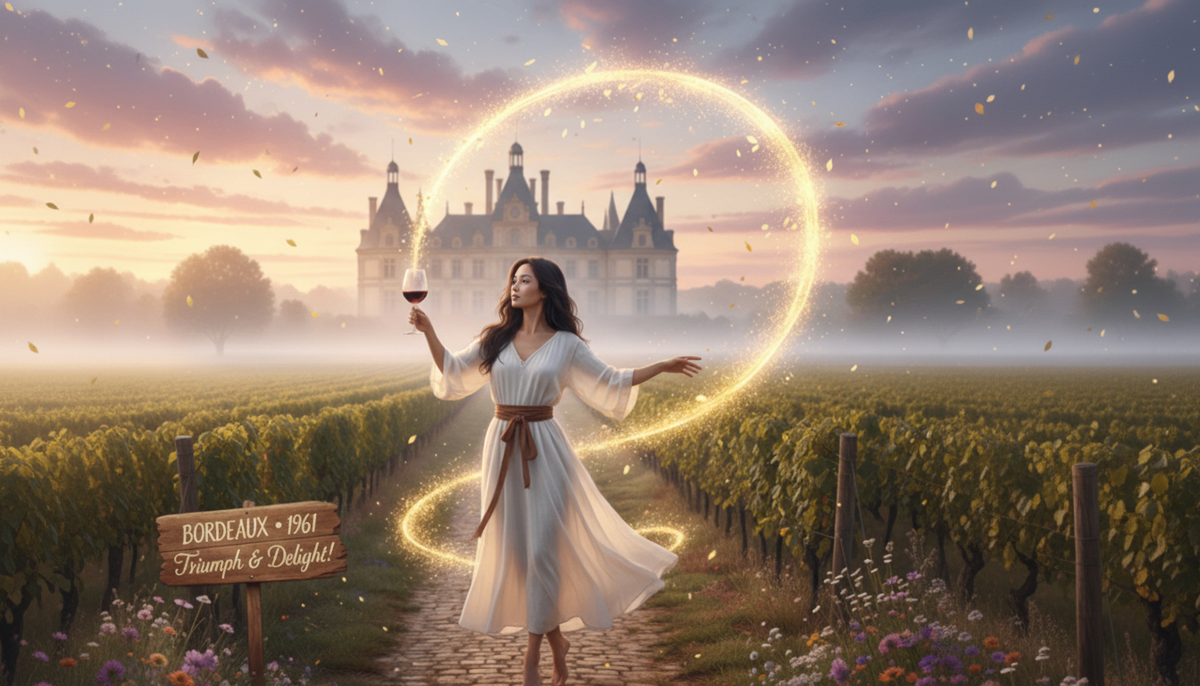
Charred vine and violet smoke after frost—can utter devastation birth such harmony, or is this the quiet magic of time?
The Season's Scar: Catastrophe and Concentration
The Bordeaux 1961 vintage is a story carved from catastrophe. The year began with a devastating frost in late May that decimated the nascent crop, reducing yields to roughly one-third of normal (often under 20 hl/ha and as low as 11 hl/ha at top estates). The crop was already reduced due to the brutal 1956 frost. The subsequent summer was hot and profoundly dry. The few surviving clusters ripened to a perfection rarely seen: the small berry size led to an extraordinary concentration of pigment and natural tannin density, lending the wines monumental extract. It was a year that began in ruin and ended in precision.
The Structure's Pledge: Ageless Tension and Living Memory
Is 1961 Bordeaux still worth aging? For perfectly stored top Médoc and Pomerol, 1961 can still be thrilling, and the very best bottles are likely to hold a bit longer—but any additional cellaring is a gamble. This vintage stands among the pantheon of the 20th century—a triumph born of scarcity and discipline. The minute yields concentrated everything: pigment, tannin, and the very soul of the vintage. Even today, its tension and clarity remain alive, the tannins softened but absolutely unbroken, the dark fruit transformed into quiet, ethereal perfume.
Decoding the Glass: Shadow, Silk, and the Iron Echo
To encounter a 1961 is to step into a cool, vast space, where light travels slow and memory is preserved. The wines move like shadow across stone—dense, yet weightless.
The Left Bank (Médoc & Graves) speaks of austerity now softened: cold graphite, classic cedar, dried cassis, tobacco leaf, and cool iron. The Right Bank (Pomerol & Saint-Émilion) leans into softer density: wild plum, the deep scent of truffle, forest floor, and worn leather.
The texture is now profoundly silken, perfectly balanced by firm, gravel-borne tannins that have polished over six decades. I once opened a 1961 Pauillac; the cork crumbled, but the wine exhaled violet and smoke as if time itself sighed.
Appellation Snapshot: Whispers Across the Gironde
The Gironde’s two shores whispered to each other across fog and time, each delivering a unique grace in 1961. Pomerol reached near-mythic status (Pétrus, Lafleur, Trotanoy), creating wines of profound, sensual density yet astonishing purity. Saint-Émilion was less consistent than Pomerol, but top estates (Figeac, Canon, Magdelaine) produced dark-fruited, iron-laced wines that have aged beautifully. Graves produced fragrant, mineral wines (Haut-Brion was especially ethereal). The great Pauillac and Saint-Julien wines showed regal structure and longevity. Margaux was patchy overall, but top wines like Palmer were silken, perfumed, and hauntingly persistent.
Cellar Choices: Rustic Methods, Immortal Results
The remarkable quality of 1961 is a paradox, born from rustic methods. In that post-war context, most estates relied on traditional fermentation vats, manual remontage (hand punch-downs), and minimal filtration. Aging occurred in French oak, typically with a modest proportion of new barrels (often around one-third to half at top estates). The total élevage spanned approximately 18–24 months. Critically, there was often no precise temperature control; the results relied heavily on instinct and deep stone cellars. Most wines were traditionally fined with egg whites and bottled unfiltered or only lightly filtered, which helps explain their remarkable texture and persistence today. Perhaps perfection hides best in the limits of what we cannot control.
Producer Call-Outs: Monuments to Patience and Sunlight
The best producers 1961 Bordeaux crafted monuments that still stand, defying the passage of decades.
- Icons. Château Latour, Lafite-Rothschild, and Mouton-Rothschild produced wines of terrifying concentration and power. Haut-Brion and La Mission Haut-Brion offered graveled finesse. Pétrus and Trotanoy remain the liquid gold standard of the Right Bank. Léoville-Las Cases and Palmer demonstrated the majesty of the Médoc’s secondary growths.
- Value plays. Grand-Puy-Lacoste, Duhart-Milon, La Lagune, La Dominique, and Figeac offer wines that are still profoundly resonant and vital, if meticulously stored.
- Wild cards. Batailley and Canon-la-Gaffelière are less heralded but are now profound in their quiet maturity. (Ducru-Beaucaillou and Pichon-Lalande are other well-cited stars of this year.)
These wines no longer shout; they hum softly in the cellar’s dark, remembering sunlight that never returned.
Drink-or-Hold Scorecard: The Final Plateau of Grace
The 1961 vintage is on its long, final plateau, demanding reverence and care.
- Early Glow (Now–2030): Most wines that have survived are at peak maturity, their tertiary beauty fully revealed. Decant gently and quickly to remove sediment, serving cellar-cool (17C).
- Sweet Spot (1961–1990): The legendary, vanished window when primary fruit and structural tannins danced in perfect, youthful harmony.
- Marathon (2031+): A handful of top Médoc and Pomerol wines, from pristine cellars, may continue to give profound experiences into the 2030s, but survival is bottle-by-bottle now. The fruit is now an echo, but the structure remains intact, articulating the wisdom of age.
Final Reflection
The 1961 Bordeaux vintage is a luminous classic, a story written in fire and stone. It turned disaster into harmony: a vintage of minute yields, monumental balance, and ageless calm. Its wines are whispers of smoke and cedar—proof that scarcity refines truth.