The Myth of Sweetness: Why Dönnhoff Eiswein 2008 Is a Laser Beam of Divine Obsession
Dönnhoff Oberhäuser Brücke Riesling Eiswein 2008 is a highly collectible German sweet wine defined by its profound concentration, brilliant acidity, and complex notes of apricot and lime zest, with an aging window of 30+ years.

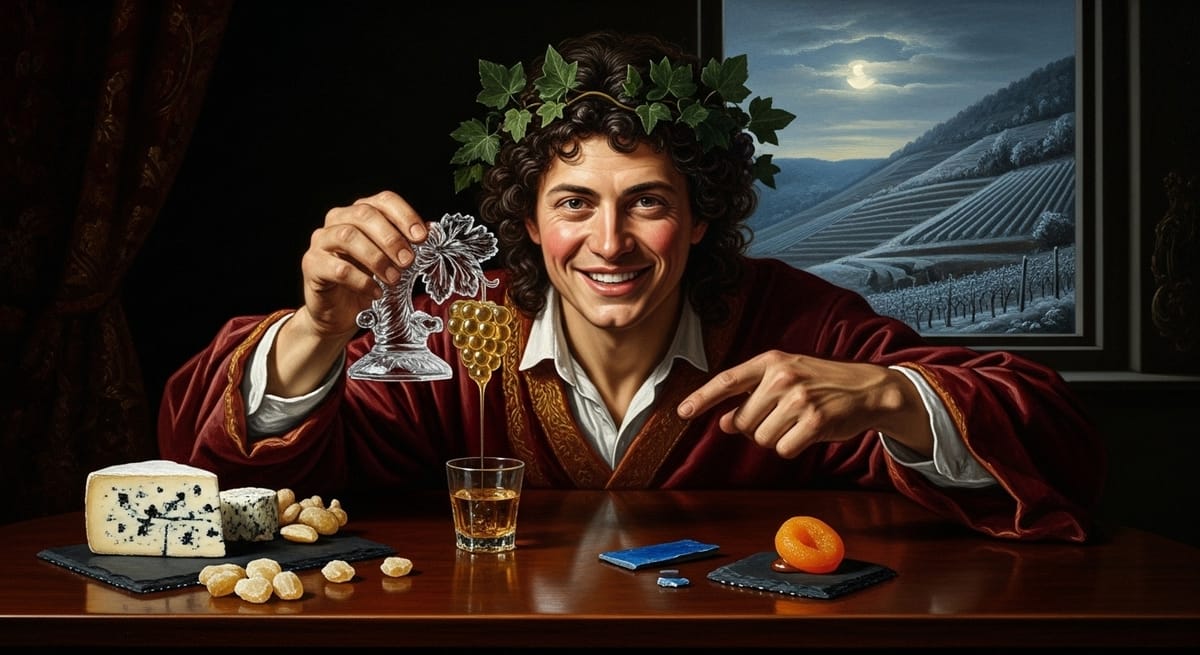
Pull up a chair, mortal. You thought you knew what sweet wine was? You thought sticky Sauternes or late-harvest sludge was the final word? Think again. We’re not talking dessert; we’re talking Dönnhoff Oberhäuser Brücke Riesling Eiswein 2008. This is bottled alchemy—the frozen, concentrated scream of a perfect vineyard, captured by a madman on a winter night. This is what happens when obsession meets a frost delay. It's a miracle, a cult, and frankly, it will ruin your palate for lesser pleasures forever. Don't say I didn't warn you.
The Nectar of Absolute Zero
In the glass, it holds the color of liquid topaz shot with pale gold, a light so pure it feels like it’s stealing luminescence from the room. The viscosity, the slow tears that slide down the glass, tell a story of concentration you simply don't see in ordinary wine. On the nose, it's a sensory riot that immediately recalibrates your universe. It's not just fruit; it's a hyper-focused projection of candied apricot, dried mango, bergamot oil, and lime zest—all wrapped in the clean, chiseled scent of wet slate and mountain stream. Give it a minute, and whispers of white truffle and aged honeycomb emerge, a tertiary depth that reminds you this is a wine born for the ages. It smells like a winter palace built entirely of glass and exotic fruit.
A Sword Fight on the Tongue
First sip, and your brain does a double-take. This wine is profoundly, undeniably sweet, yet it's entirely un-cloying. Why? Because the legendary Mosel acidity—in this case, supercharged by the Eiswein process—hits like a steel cable pulling all that luscious fruit taut. You get an immediate, thrilling tension: a high-wire act of concentrated apricot, passion fruit jelly, and golden raisin perfectly countered by a laser-beam of racy, spine-straightening acidity.
The texture is the real flex here. It’s dense, viscous, and oily, yet the finish is light, clean, and ridiculously persistent—a saline-flickering, crushed-stone echo that lasts longer than most of my past relationships. It proves that balance in wine isn't about compromise; it’s about having the structural components to handle this much hedonism. This is precision hedonism, engineered by someone who understands that true power lies in control.
The Master and the Midnight Harvest
The secret is the Brücke vineyard (German for "bridge"), a tiny, south-facing sliver of pure, blue volcanic slate soil in Oberhausen. This is H. Dönnhoff's core turf—a producer who treats the vine with the same monastic rigor one treats a secret temple. Eiswein, for the uninitiated, is the vinous equivalent of the Apollo mission: a high-risk, high-reward proposition where grapes must freeze solid on the vine and be picked at a deathly low temperature (at least $-7^{\circ}C$) at dawn. The water content remains frozen, while the sweet, acidic juice is pressed out in concentrated drops.
The 2008 vintage in the Nahe was a year of nervy tension. A long, cool growing season ensured the grapes built up exceptional levels of natural acidity. This acidity is the literal anti-venom to the insane concentration required for Eiswein, making the 2008 Eiswein a triumph of structure and purity. This is not a fat, overripe confection; it’s a perfectly articulated, crystalline expression of place and patience.
Pairing Tips for the Cultured Scoundrel
Serve this cold, but not ice-cold. Don’t even bother with a decanter—this has too much dignity for a frantic air bath. Get yourself a proper, small Zalto-style dessert glass and pour an ounce and a half.
Food? Don’t waste this on a fruit salad. This wine demands contrast.
- Seared Foie Gras with Fig Jam: The richness and fat are absolutely suplexed by the wine's acidity and then beautifully complimented by the apricot and honeyed fruit. It’s a classic pairing for a reason.
- Roquefort or Stilton Cheese: The sharp, blue salinity and creaminess meet the wine's sweet core in a collision of flavor that makes the table go quiet.
- Spicy Thai or Vietnamese Curries: Seriously. The intense sweetness and acid will calm the chili heat and enhance the exotic fruit flavors in the dish. It’s chaos and order, a truly Dionysian pairing.
The Long Game: Collectibility and Immortality
Let’s not play games. Dönnhoff Eisweins are blue-chip assets. Eiswein production is tiny and inherently risky, making scarcity a given. The 2008, from a tense, acidic vintage, is built like a granite vault for the cellar. Expect this to age gracefully for another 30+ years, developing those classic notes of petrol, honeyed toast, and smoky incense.
This doesn't just hold value; it appreciates in complexity and price. The major critics—the Robert Parkers and the James Sucklings of the world—have historically poured high-90s praise on Dönnhoff Eisweins, and the market tracks this pedigree. You're not buying a wine; you're buying a time capsule that only gets more valuable and more profound with the passage of its bottled time.
Final Verdict: Buy the Ticket, Take the Ride
You can walk away now and go back to your safe, anonymous, mass-produced wines. Or you can open the door to this Dönnhoff Eiswein 2008 and experience the kind of purity, intensity, and sheer exhilarating tension that defines true greatness. This is a monument to the relentless pursuit of perfection, a frozen drop of Nahe terroir. Don't be the friend who "almost bought a bottle." Acquire it. Cellar it. Then open it on a quiet night and let it remind you that the deepest pleasures are often the most fleeting, but the most memorable.