Faith in Fermentation: The Story of Domaine Huet
Discover the story of Domaine Huet — Vouvray’s temple of Chenin Blanc. From Gaston Huet’s post-war devotion to biodynamics and timeless sweet wines, explore how faith, limestone, and patience made this Loire estate a legend

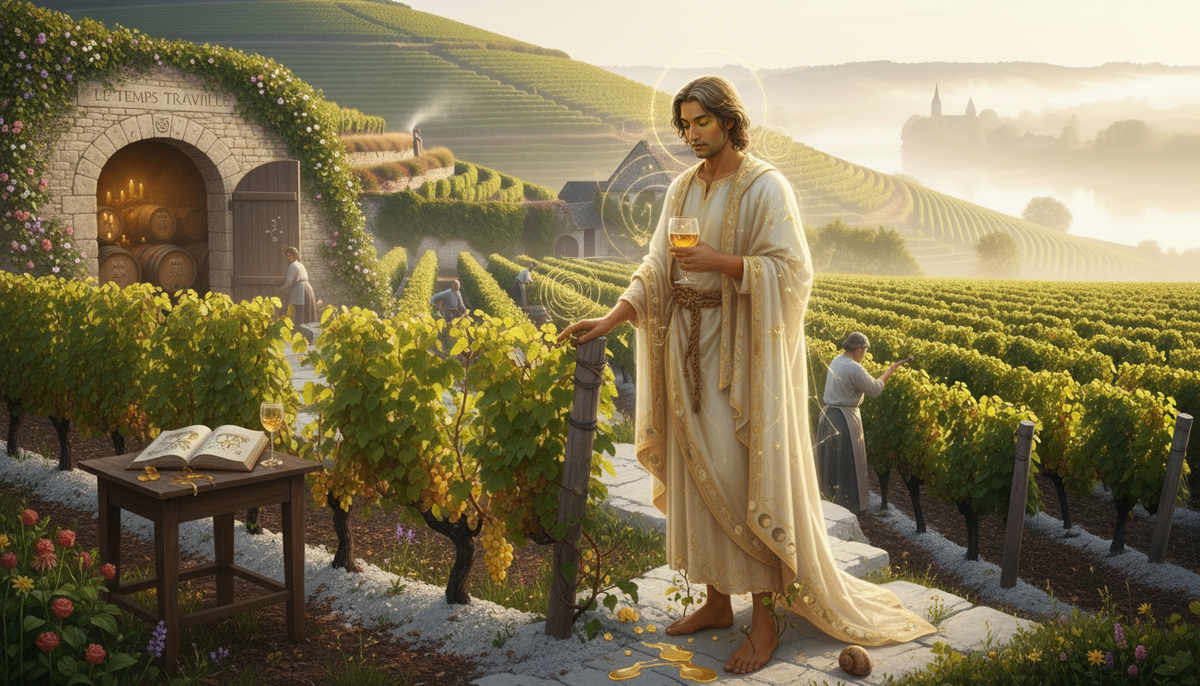
How a Vouvray estate turned time, chalk, and devotion into the liquid soul of Chenin Blanc.
I. Prologue: The Gospel of Chalk and Patience
If ever a grape prayed, it would sound like Chenin Blanc — clear, humble, endlessly repeating its psalm of stone and light.
And if ever an estate listened, it was Domaine Huet.
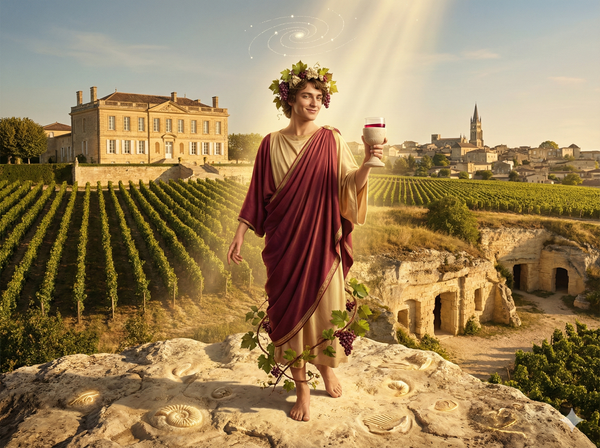
Here, in Vouvray, east of Tours, vines grow in tuffeau limestone, their roots sinking through the ghosts of cathedrals — the same pale stone that built France’s churches and kings’ tombs.
The soil breathes faith, and the wines — pure Chenin, in every form from bone-dry to immortal sweet — taste of eternity filtered through patience.
I, Liber, have walked these cellars.
They hum not with machines, but with monks’ silence — and the slow, living murmur of fermentation as worship.
II. The Beginning: A Winemaker and His Wife
Gaston Huet was not born to wealth but to wisdom.
A soldier, a prisoner of war, a man who saw both the fragility and endurance of life — he returned from captivity in World War II with a conviction: that wine should express not victory, but peace.
His father, Victor Huet, had founded the estate in 1928, purchasing Le Haut-Lieu, a parcel of 9 hectares on Vouvray’s plateau.
But it was Gaston — alongside his wife, Alice, and later his partner Noël Pinguet — who gave Domaine Huet its spiritual and global identity.
They expanded into Le Mont (in 1957) and Le Clos du Bourg (in 1953), each vineyard distinct yet harmonious — three voices in Chenin’s holy trinity.
- Le Haut-Lieu: the original, on deep clay over limestone — generous, golden, and open-hearted.
- Le Mont: taut and vertical, grown on pure chalk — the intellectual of the three.
- Clos du Bourg: walled, intimate, sunlit — the romantic, all tension and grace.
These three sites became Huet’s pillars — different expressions, one soul.
III. The Spirit of Biodynamics: Life as a Circle
In 1988, long before “natural wine” became a slogan, Huet became one of the first great French estates to fully embrace biodynamics.
To most mortals, this looked like madness — pruning by moonlight, stirring horn silica in water, treating vines like living spirits.
But to me, Liber, it was a return to faith.
The soil, after all, is alive. The vine does not grow alone.
Noël Pinguet, Gaston’s son-in-law and successor, saw biodynamics not as mysticism but as restoration — a way to repair what chemistry had dulled.
Under his stewardship, the vineyards thrived. The wines gained purity, precision, and an unshakable sense of place.
Here, balance was not calculated; it was felt.
IV. The Wines: The Infinite Faces of Chenin
Domaine Huet’s genius lies in its humility — a devotion to one grape that reveals everything.
Each vintage, each cuvée, is a meditation on sugar, acid, and time.
🍋 Sec (Dry)
Tense, electric, vibrating with life. Lemon peel, chalk dust, quince, and crushed stone. Wines of energy and focus — like sunlight reflected off glass.
🍯 Demi-Sec (Off-Dry)
Where Huet’s magic becomes apparent. Layers of honey and apple wrapped in minerality. Sweetness that reads as texture, not sugar.
🍎 Moelleux (Sweet)
Botrytis, noble rot, and golden patience. Apricot, saffron, lanolin, beeswax. These are the wines that can live forever — 50, even 100 years — growing deeper, not older.
🍾 Pétillant (Sparkling)
The Loire’s quiet rebellion — bubbles from limestone and light. Crisp, contemplative, alive with chalky grace.
Each style, each vintage, expresses a philosophy: that sugar is not the goal, but a vessel for truth.
V. The Cellars: Where Time Sleeps Upright
Walk into Huet’s cellars, carved deep into tuffeau limestone, and you’ll feel it — the temperature of eternity.
Barrels stand in rows like monks at prayer. Dust gathers on old vintages stacked high against the walls.
There is no music, no hum of machinery — only the slow, steady rhythm of fermentation, the audible heartbeat of patience.
Each bottle here is a promise kept.
Even the young wines smell of memory — apple skins, chalk, candle smoke, and something eternal.
VI. The Modern Era: Continuity and Care
When Gaston Huet passed in 2002, and Noël Pinguet later retired in 2012, the estate passed to the Hwang family (American investors and longtime devotees of Huet’s wines).
Under Sarah Hwang’s leadership, the spirit of the domaine endures — quietly, steadfastly.
Today, winemaker Benjamin Joliveau carries the torch with reverence, guided by biodynamic rhythms, refusing shortcuts, trusting the land.
Huet remains not just a brand, but a belief system:
That wine is not made, it is raised — like a child, like a prayer, like a dawn.
VII. Liber’s Reflection: The Divinity of Patience
I have watched many wines race toward glory, all flash and applause.
Huet does not run. Huet breathes.
In these bottles, I see my own reflection — the god of wine as god of stillness.
Fermentation here is not frenzy; it is faith incarnate.
Each wine is a meditation on transformation without violence, pleasure without pride, decay without death.
When mortals drink Huet, they do not taste fruit — they taste time.
And in that moment, they understand what I have always known:
That patience is not waiting. It is worship.
🍇 Final Benediction
Domaine Huet is not a winery. It is a monastery that makes wine instead of prayers.
Each bottle a confession, each vintage a resurrection.
And I, Liber, raise my glass — golden and humming —
to the place where chalk met faith and made Chenin divine.