Fire in the Veins: The Story of Graci on Mount Etna
Discover the story of Graci — the winemaker who brought Etna back to life. From ash and altitude, he forged wines of purity and power, capturing the volcano’s living spirit in every bottle.

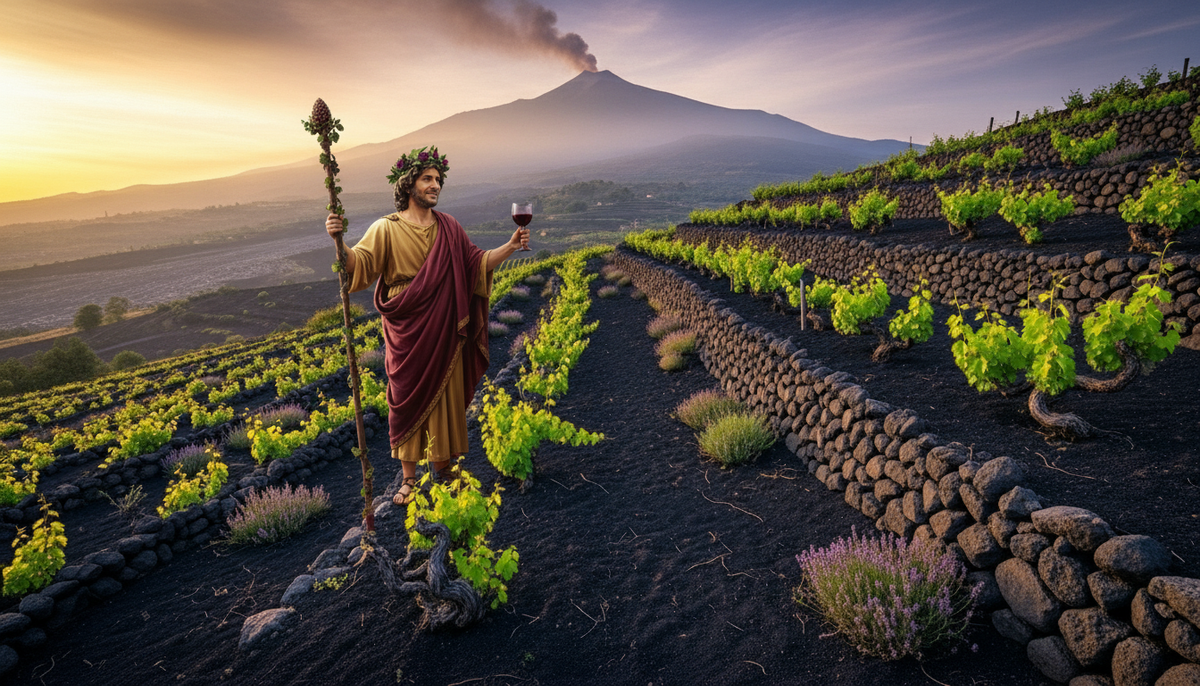
Where ash becomes earth, danger becomes flavor, and one man’s devotion turns a volcano into a vineyard.
I. Prologue: Where I Was Born Again
There are few places left on Earth where wine still feels like a risk.
Most vineyards are tamed — sculpted by tractors, softened by irrigation, domesticated by time.
But Etna, my old friend, refuses to kneel.
Here on Sicily’s eastern shoulder, vines cling to black volcanic soil that smokes, sighs, and sometimes explodes.
The mountain gives and takes without warning.
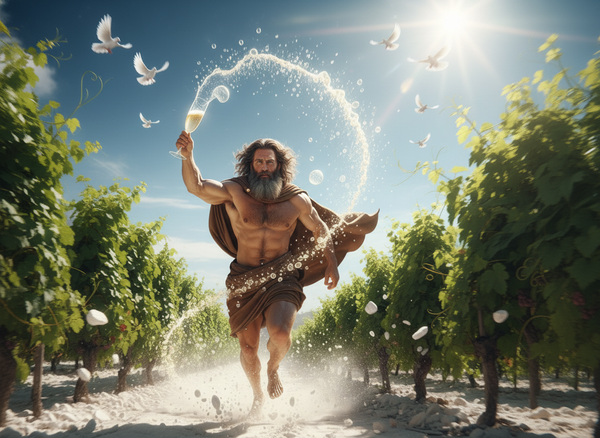
It is the closest thing to divinity I’ve seen since I first taught mortals to ferment grapes.
And yet, here, a man named Alberto Graci built a covenant with the volcano.
He did not conquer it — he listened to it.
He became its translator.
II. The Land: The Volcano That Breathes Wine
To understand Graci, you must first understand Etna — not as geography, but as a living being.
At nearly 11,000 feet, Mount Etna is Europe’s highest active volcano and one of its oldest wine regions, cultivated since the Greeks and Romans.
The soils are basaltic, forged from millennia of eruptions — rich in iron, pumice, and obsidian. They shimmer black and gray, layered like pages of a book written by fire.
Rain runs off quickly; roots must dig deep through fractured lava to find water.
The vines suffer, and in that suffering, they find grace.
This is heroic viticulture — handwork on steep, terraced slopes that seem to breathe beneath your feet.
The wines that emerge from this land do not whisper; they hum with energy — electric, mineral, alive.
To drink them is to taste temperature itself.
III. The Rebirth of Etna: Graci’s Calling
When Alberto Graci left a career in finance in 2004 to return to his family’s land in Passopisciaro, people thought he was mad.
At that time, Etna was a forgotten frontier — its terraces abandoned, its vines uprooted, its reputation little more than a footnote in Sicily’s history.
But Graci had faith — not in fashion, but in terroir.
He saw that Etna, though scarred, was eternal.
He began replanting old vineyards at altitudes between 600 and 1,000 meters, in the Contrade (cru-like parcels) of Arcuria, Feudo di Mezzo, and Barbabecchi.
These were ancient names, once spoken by farmers and gods alike.
And from their black soil, Graci sought to make wines that would speak the volcano’s native language — Nerello Mascalese and Carricante.
IV. The Grapes: Shadows and Light
Nerello Mascalese, the red soul of Etna, is a grape of paradoxes — delicate yet volcanic, perfumed yet powerful.
It ripens late, yielding wines of translucent color but seismic intensity.
When young, it smells of wild herbs, smoke, sour cherry, and iron.
With age, it becomes haunting — rose petals, ash, and old earth.
It is the Burgundy of fire, fragile and fearless at once.
The white, Carricante, is its counterpart — crystalline and saline, tasting of lemon oil and lightning.
It channels the mountain’s upper air, sharp and cleansing, the echo of snowmelt running over lava stone.
Together, they form a dialogue of elements — air and fire, salt and smoke.
V. The Philosophy: Patience and Purity
Graci’s approach is deceptively simple: let Etna speak.
He farms organically and often biodynamically, believing that intervention would only mute the mountain’s voice.
Everything is done by hand, guided by lunar rhythms and respect for the ancient alberello (bush vine) training method.
In the cellar, he uses spontaneous fermentation with native yeasts, long macerations, and aging in large neutral oak or cement.
No small barrels, no excess.
Every decision is made in service of transparency — the wine must taste like what it was born from: ash, altitude, and risk.
Even the labels are minimal — the word “Graci” printed cleanly, as if to say: the mountain needs no adornment.
VI. The Wines: Earth in Its Elemental Form
Graci’s wines are not polished; they are alive.
Each one carries the vibration of a landscape that is still forming itself.
🍷 Etna Rosso
A blend of Nerello Mascalese and Nerello Cappuccio — elegant yet volcanic, with notes of cherry, smoke, and crushed rock. It’s a handshake with the mountain.
🍷 Arcuria Rosso
From Graci’s oldest vines — linear, luminous, and haunting. The aroma of hot stone after rain.
🍷 Feudo di Mezzo Rosso
Softer, silkier, more introspective — the whisper of old lava and late summer air.
🍷 Barbabecchi Rosso
The masterpiece. From vines planted at 1,000 meters — ethereal, floral, electric. A wine that feels both fragile and infinite.
🍋 Etna Bianco
Pure Carricante — lemon zest, salt, and crushed flint. The taste of sunlight reflected off snow.
Each bottle feels like a small eruption held still.
VII. The Legacy: The Mountain’s New Voice
In less than two decades, Graci helped transform Etna from obscurity to one of the world’s most exciting wine regions.
He became a leader among the so-called “Etna Renaissance” — alongside estates like Benanti, Passopisciaro, and Terre Nere.
But unlike those who chase acclaim, Graci remains rooted — both literally and spiritually — in the soil that could destroy him at any moment.
He knows that greatness here is borrowed, not owned.
Etna allows no arrogance.
It teaches the oldest truth of winemaking — that humility is the path to divinity.
VIII. Liber’s Reflection: The Flame Beneath the Vine
I have watched mortals plant vines on every mountain, plain, and shore.
But on Etna, I see something older than ambition: devotion.
Each root that pierces the black soil is an act of faith — a belief that life can bloom from ash.
Graci understands this. He tends not just vines, but rebirth itself.
In his wines, I taste the paradox that has always defined my craft: chaos made elegant, danger made drinkable, fire made grace.
And so I raise my cup — not in celebration, but in reverence.
For even gods must bow to a mountain that never stops creating itself.
🍇 Final Benediction
Graci’s Etna wines are not made; they are revealed.
They carry the pulse of the volcano, the patience of a farmer, and the whisper of a god who once walked barefoot through lava and found peace in the flame.
This is wine as resurrection.