Mathematics and Mischief: The Story of Ramos Pinto
Discover the story of Ramos Pinto — the visionary Port house that fused art, science, and seduction. From Adriano Ramos Pinto’s revolution in 1880 to today’s precision and passion, explore how the Douro’s fire was turned into golden harmony
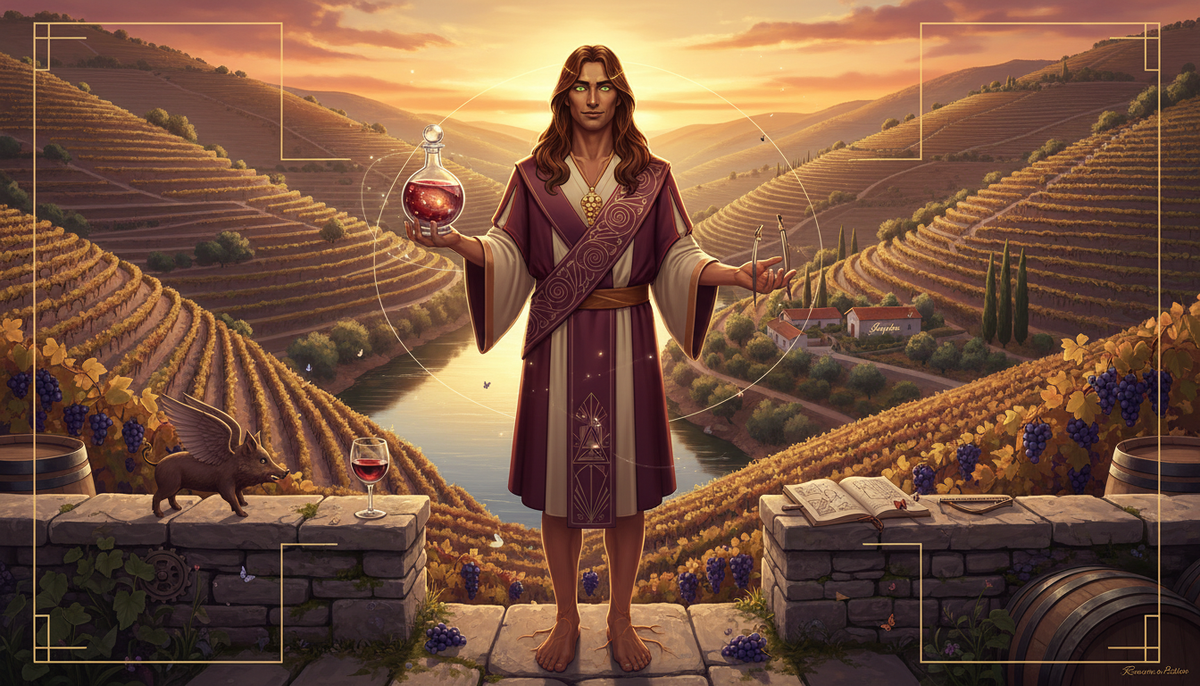
How an artist–accountant from Porto made Port seductive, scientific, and scandalously modern.
I. Prologue: When the Douro Met Its Mirror
Not all vineyards are born to rebel.
But the Douro — that vast granite gorge where men once wrestled barrels down rivers and cliffs — has always belonged to the restless.
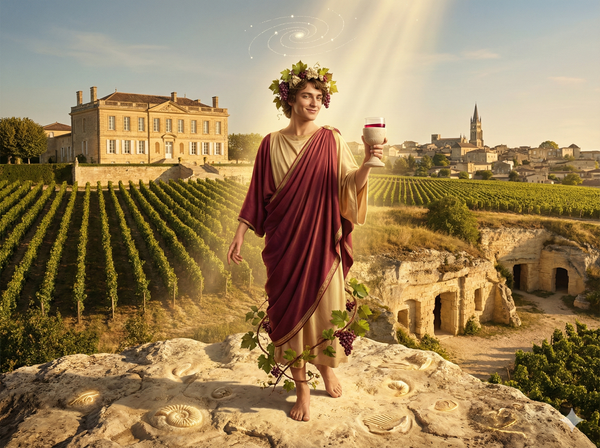
When I, Liber, walked those terraced slopes, I saw beauty and brutality intertwined. The vines dug into rock like artists into madness. The sun hit the shale and turned it to fire. And in that chaos, a young man named Adriano Ramos Pinto found order — not to tame the Douro, but to translate it.
He would become the first winemaker to treat pleasure as an exact science.
II. The Beginning: Porto, 1880 — The Age of Provocation
Adriano founded Ramos Pinto & Cia. in 1880, at only 21 years old.
Port was already the drink of aristocrats and empire, but Adriano saw that its mystique had grown stale — dusty casks, pompous merchants, and romance without pulse.
So he began again.
He built his company not in the vineyards, but in Porto’s Ribeira district, where the city met the river, the merchants met the sailors, and temptation met commerce.
From here, he launched a revolution: modern marketing, modern winemaking, and modern seduction.
III. The Artist of Science
Adriano Ramos Pinto was a paradox.
He studied mathematics and law, but dreamed like a painter.
He commissioned artists to design sensuous posters — women with tilted heads and bare shoulders, framed by vines and constellations — while he charted the chemistry of fermentation on graph paper.
He was the first to measure, to map, to record: temperature, pH, grape sugar, barrel humidity.
To him, science was not the enemy of art; it was the canvas.
By the turn of the century, Ramos Pinto had introduced systematic blending, estate bottling, and controlled fermentation — techniques decades ahead of their time.
While others made Port by intuition, Adriano made it by insight.
But he never lost his sense of mischief.
Each cask was named for a poet, each blend dedicated to a lover, each calculation made with a wink toward eternity.
IV. The Douro Estates: From Granite to Glory
By 1912, Ramos Pinto owned four of the Douro’s finest quintas (estates):
- Quinta do Bom Retiro — the beating heart of the house, its vines clinging to schist terraces, the river curling below like a dark ribbon.
- Quinta da Urtiga — steep, wild, where Touriga Nacional thrives in struggle.
- Quinta do Bons Ares — higher and cooler, giving aromatic grace to the blend.
- Quinta da Ervamoira — the jewel of the modern era, planted in the early 1970s in the Upper Douro, on flat terraces carved from time itself.
Each was a laboratory of terroir — Adriano’s symphony of soil and sun, discipline and desire.
Even today, Ramos Pinto’s vineyards remain among the most meticulously mapped in the region — measured by altitude, orientation, and exposure to both moonlight and mist.
V. The Wines: Structure and Seduction
To taste Ramos Pinto is to feel precision wrapped in velvet — the calculation of a god disguised as indulgence.
🍷 Ramos Pinto Vintage Port
Intense, aromatic, and architectural — blackberry and cacao structured by iron and time. Each vintage feels like a cathedral built from granite and night.
🍷 Duas Quintas (Douro DOC)
A modern classic — dry red made from the same vineyards as the Ports. Ripe fruit, polished tannin, and a pulse of minerality that hums beneath the surface.
🍷 Late Bottled Vintage and Tawny Ports
Amber glows of patience — layers of walnut, orange peel, and dried fig. A dialogue between air and oak, discipline and pleasure.
Each wine speaks in perfect grammar — the mathematics of pleasure articulated through the syntax of soil.
VI. The House of Icons
Ramos Pinto was not merely a winemaker — it was a movement.
Its advertising broke boundaries; its aesthetic shaped Portuguese modernism.
Posters from the early 1900s — designed by artists like René Vincent — turned Port from patriarchal ritual into erotic sophistication.
In cafés across Lisbon and Paris, Ramos Pinto became the drink of thinkers, lovers, and iconoclasts.
It was the first Portuguese wine brand to treat marketing as art, the bottle as sculpture, and the label as identity.
VII. The Modern Era: From Legacy to Light
In 1990, Ramos Pinto joined the Louis Roederer family — a union of French finesse and Portuguese fervor.
Far from diluting its soul, the partnership elevated its precision.
Under the stewardship of João Nicolau de Almeida — one of the most visionary winemakers in Portugal — the house embraced technology while deepening tradition.
He refined grape selection, mapped microclimates, and championed sustainability long before it became a global mandate.
Today, Ramos Pinto continues to embody balance — a bridge between past sensuality and future discipline, between the fire of the Douro and the cool intellect of the laboratory.
VIII. Liber’s Reflection: The Alchemy of Opposites
Among all the estates I have blessed, none better capture my own contradictions than Ramos Pinto.
For I am the god of both pleasure and pattern, of ferment and form.
Adriano understood this. He saw that to master the vine is not to dominate it, but to listen to its logic — and to make that logic sing.
His wines are proof that the divine hides in data; that a perfect curve, a perfect pH, or a perfectly timed harvest can feel as sensual as a kiss.
Ramos Pinto reminds mortals that beauty is not born from indulgence alone — it needs discipline, daring, and the courage to measure even the mysterious.
🍇 Final Benediction
Ramos Pinto is not just Port — it is Port understood.
It is where reason and rapture shake hands, where granite turns to silk, and where a mathematician built a temple to pleasure.
And I, Liber, raise my glass to that —
for no formula, however perfect, can ever fully contain the taste of desire.