Night Harvest Over To Kalon Ridge: Opus One 2016
Vibrant plant-forward pairings and mythic storytelling bring Opus One 2016 food pairing into new, terroir-rooted depth.

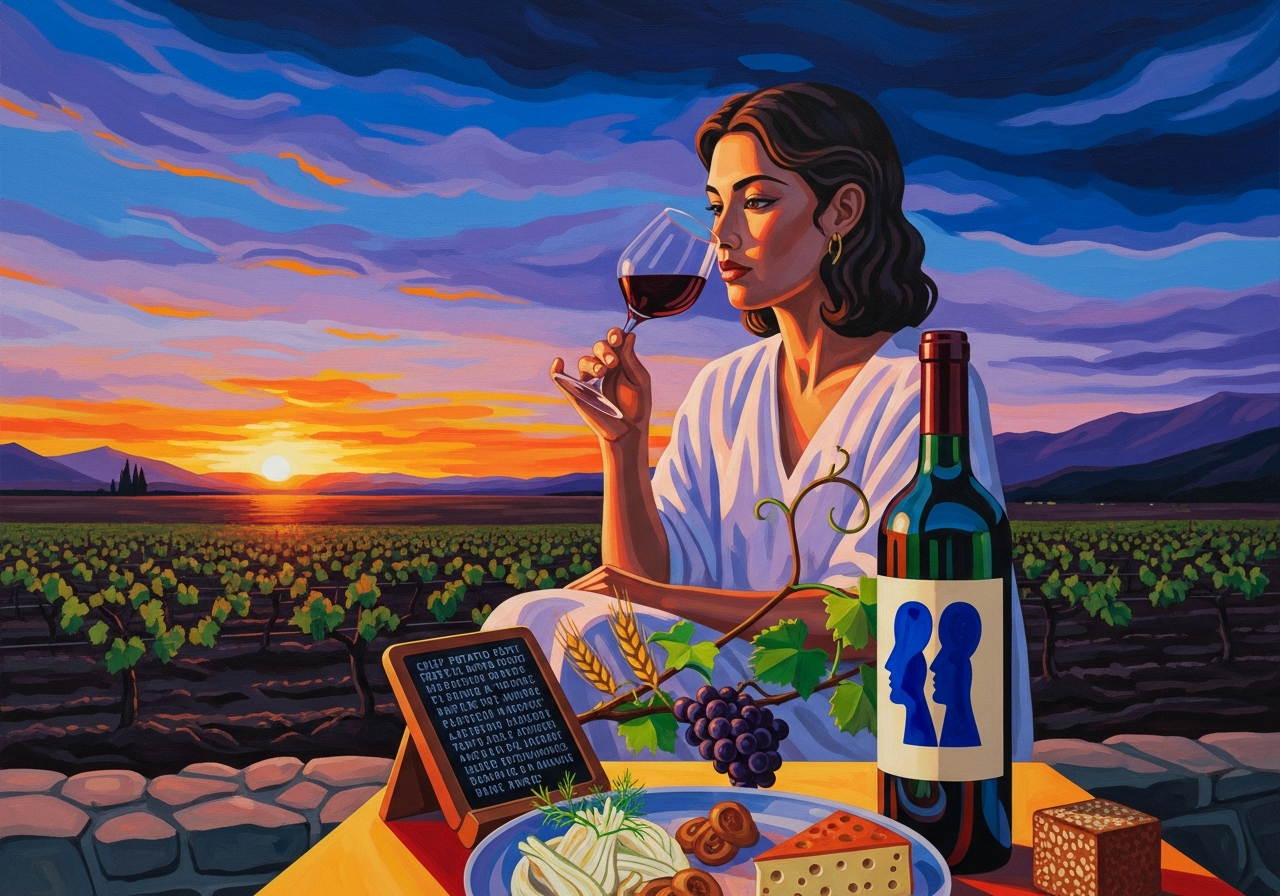
I pour Opus One 2016 the way I once poured libations for the returning dead—slowly, reverently, letting the garnet stream find its curve in the tulip-bowled glass. At 16–18 °C it begins to speak, though an hour of air unthreads its tighter knots, releasing that graphite line that always reminds me of writing tablets in the underworld—stone scoring truth into silence. Violet, cassis, and a dark herbal whisper rise first, as if carried on the night winds that glide down from the Mayacamas.
This wine is a child of Oakville in California’s Napa Valley, drawn from the famed To Kalon and surrounding estate vineyards. Opus One—born of Robert Mondavi and Baron Philippe de Rothschild’s shared conviction that Franco-American wine need not bow to either lineage—works with a Bordeaux-inspired blend led by Cabernet Sauvignon, folded with Merlot, Cabernet Franc, Petit Verdot, and Malbec. The farming is sustainably managed with organic practices, cover crops, and soil-reviving composts, the kind of vineyard care that stirs my old vine-goddess instincts. The soils are a mosaic of gravelly loam, volcanic ash, and alluvial wash—each layer holding its own memory of fire, flood, and time.
A Wine Shaped Like Dusk
The 2016 vintage carries the long exhale of a gentle, balanced year: cool mornings, warm days, and a harvest that unfolded without panic. In the glass, the wine moves like dusk finding its way across the valley—measured, deepening, serene. Aromas bloom in widening circles: blackcurrant, dried lavender, crushed blueberry leaf, cedar just beginning to sweeten at its edges. Below it all lies a faint, ferrous earthiness, an echo of volcanic soils still warm beneath the surface.
On the palate, the wine is medium to full-bodied, structured yet supple, its tannins fine-grained like well-worked clay. Blackberry, black cherry, cacao husk, and a thread of espresso glide forward. Sustainable, soil-centered farming often reveals itself not in flavor but in vitality—a hum in the acidity, a kind of inner lift. Here, that vibrancy carries the finish longer than expected, tapering off like a shadow drawn thin.
Vegetables Worthy of a First Growth of the New World
For Opus One 2016, I drew deeper than the usual mushroom-and-polenta comfort. This wine has the grace to hold nuance and the depth to spar with richness—so the dishes must be worthy.
A smoked celeriac “steak” brushed with black cardamom oil is one such offering. The celeriac, slow-smoked until tender, carries a haunting mix of sweet earth and gentle bitterness. Black cardamom brings a resinous, incense-like top note that echoes the wine’s cedar and graphite. Together they create a pairing that feels almost ritualistic, like the offerings once laid at my feet in temples now lost.
Another companion: ember-roasted kabocha squash filled with miso-laced walnut cream. The squash’s caramelized edges amplify the wine’s fruit while the miso deepens its savory undertones. Walnut cream adds enough fat to soften tannins without overwhelming the wine’s natural lift. This pairing speaks to the duality I know well—half a year in the living world, half in the underworld—sweetness balanced by depth, warmth edged with shadow.
Roots That Glow in the Firelight
To honor the wine’s subtle power, I turned to dishes that feel forged rather than merely cooked.
Fire-charred carrots glazed in tamarind and burnt honey offer an electric interplay of sweet, sour, and smoke. Tamarind’s acidity sharpens the wine’s cassis core, while the burnt honey’s caramel bitterness locks hands with its oak. This is a pairing born of contrasts that resolve into harmony, like my brother Dumuzi slipping between gazelle and serpent to escape the galla’s grasp.
And from my underworld ledger of flavors, a singular match: cocoa-dusted parsnips roasted until their edges crisp, then drizzled with rosemary ash oil. The cocoa deepens the wine’s mocha notes; the rosemary ash mirrors its faint herbal shadow. Parsnip’s gentle sweetness finds the wine’s mid-palate and brightens it, like the first green shoot rising after six months below.
If one must nod to meat, keep it brief: a whisper-thin slice of duck prosciutto folded beside embered figs. It’s the figs—smoke-sweet, seed-crackling—that complete the exchange, not the duck.
Indulgences from the Hearth
Crisp potato rösti layered with caramelized fennel makes a bright, savory side. The fennel’s anise spark lifts the wine’s floral notes, while the rösti’s fat works kindly on its tannin. Or serve grilled king oyster mushrooms brushed with juniper butter—their fir-like resin pulls unexpected forest tones from the wine.
For the final bite, keep the dessert bowl closed. Instead, a shard of aged mimolette or a thyme-scented almond shortbread carries the wine across the finish line with dignity. Mimolette’s salty caramel rounds the tannins; the shortbread’s herbal thread invites one last sip.
Time’s Long Ledger
As the underworld’s scribe, I know the patience required for any soul—or wine—to reveal its full account. Opus One 2016 is radiant now with a splash-decant and generous glassware, but its truest voice will emerge between 2028 and 2038. With time, the graphite softens to dust, the fruit deepens to liqueur, and the cedar becomes forest floor after rain.
Honor it with imagination. Honor it with fire-touched vegetables and dishes that understand the language of earth. And when you pour it, pour slowly. All things worth remembering begin with a slow pour.