Precision and Rebellion: The Story of Bodegas Remírez de Ganuza
Discover how Fernando Remírez de Ganuza transformed Rioja through precision. From hand-sorted vines to architectural winemaking, explore how innovation, discipline, and devotion reshaped Spain’s most historic wine region

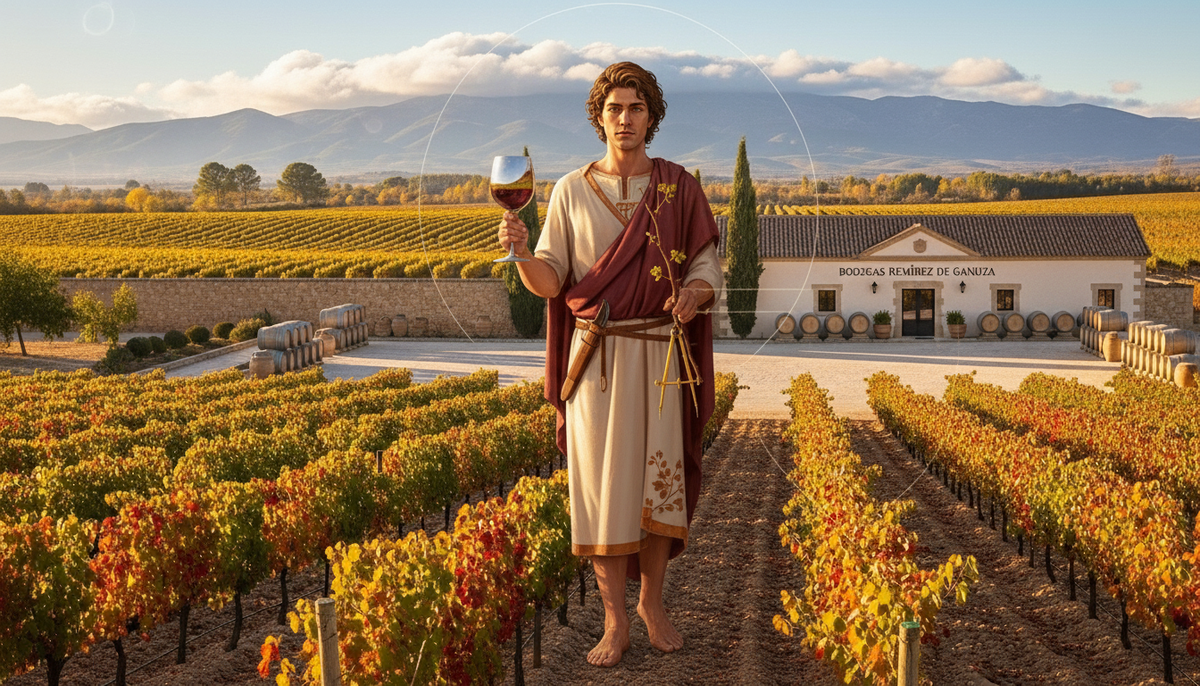
How a butcher’s son from Rioja taught Spain’s oldest vineyards to think like a watchmaker — and made perfection look effortless.
I. Prologue: The Weight of Tradition
Rioja.
A land of barrels and lineage, of families who have made wine for centuries under the same roofs and stars.
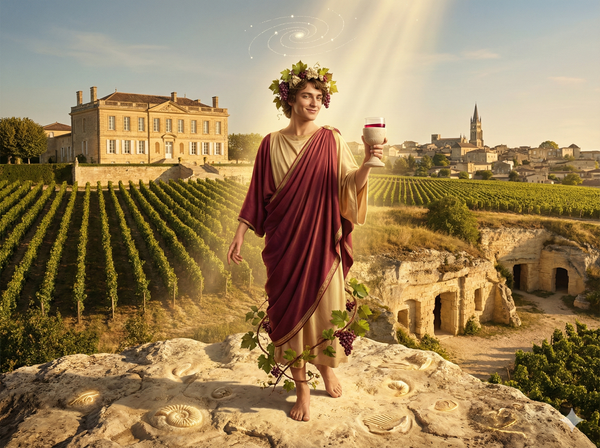
When I, Liber, pass over its golden hills, I feel both pride and fatigue — the pulse of greatness and the comfort of repetition. For centuries, Rioja has spoken in the same noble dialect: Tempranillo, American oak, time.
And then came a man who spoke in the same language but wrote a new grammar.
Fernando Remírez de Ganuza — the butcher’s son from Samaniego, who saw the vine not as inheritance, but as instrument.
He did not break Rioja’s rules.
He re-engineered them.
II. The Beginning: The Man Who Looked Closely
Fernando was born in 1949 in Samaniego, a small town at the foot of the Sierra de Cantabria. His first craft was not wine, but precision — he worked as a butcher, learning the discipline of selection: which cut to keep, which to discard, how to judge quality by touch, smell, intuition.
When he turned to wine in 1989, he brought that same surgeon’s eye to Rioja — and changed its future forever.
He began by buying old vineyards, not young ones. He sought vines planted before the 1970s, when Rioja modernized too quickly.
He wanted roots that remembered — vines that had survived frost, drought, and the quiet discipline of time.
By the time he built his winery in Samaniego, he had assembled a mosaic of over 80 hectares, spread across the best villages of Rioja Alavesa: Laguardia, Leza, Elciego, San Vicente de la Sonsierra.
It was a patchwork of perfection, stitched by obsession.
III. The Land: The Bones of Rioja Alavesa
The Rioja Alavesa subregion is the smallest of Rioja’s three zones, but it holds the oldest heart.
Here, vines cling to limestone-rich soils at high altitude — between 450 and 700 meters above sea level — where cool mountain air tempers the sun’s power.
The resulting grapes — mostly Tempranillo, with traces of Graciano and Viura — ripen slowly, gaining tension as well as ripeness.
From this soil comes Rioja’s paradox: warmth and precision, power and restraint.
Remírez de Ganuza understood this duality intuitively. He treated each vineyard not as a source, but as a personality — and he refused to blend away its character.
IV. The Method: Precision as Philosophy
When I watched Fernando work, I recognized something divine in his ritual — not chaos, but clarity.
His greatest innovation was selection.
He would sort grape bunches by hand and divide them into “shoulders” and “tips.”
- The shoulders — the upper part of the bunch, with smaller, thicker-skinned berries — went into his Reserva and Gran Reserva wines.
- The tips — juicier, lighter, less structured — were used for the young wines.
This was unheard of in Rioja.
He treated grapes like instruments in an orchestra, each with a distinct role in the harmony.
He also replaced traditional grape transport with small boxes and cold rooms, reducing oxidation before fermentation. He aged wines in French oak (not American) for control, not vanity.
Every element was engineered toward precision — a watchmaker’s rhythm in a winemaker’s world.
Even the bottling system was redesigned.
Gravity replaced pumps.
Temperature and humidity were monitored with surgical care.
It was not winemaking. It was architecture.
V. The Wines: Architecture in a Glass
🍷 Remírez de Ganuza Reserva
A benchmark Rioja — dense yet luminous, built from the shoulders of the best Tempranillo. Notes of black cherry, cedar, graphite, and a whisper of balsamic oak. Structure that hums rather than shouts.
🍷 Gran Reserva
The house’s cathedral. Aged up to 10 years before release, it combines the weight of time with the freshness of restraint. Tobacco, leather, dried violets, truffle, and dark chocolate — the aftertaste of patience.
🍷 Trasnocho
Perhaps the most inventive — the “second pressing,” where the remaining juice is extracted gently by inflating a water-filled bag inside the skins. It yields a wine of remarkable clarity and intensity — a paradox of softness and strength.
🍷 Erre Punto Blanco & Tinto
The younger siblings — pure, vibrant, and expressive, capturing Rioja Alavesa’s immediacy without losing its poise.
Every bottle, whether simple or grand, reflects the same truth:
“Perfection is not added; it is revealed by removal.”
VI. The Legacy: The Precision Revolution
Fernando Remírez de Ganuza did for Rioja what I once did for the vine itself — he brought discipline to passion, method to chaos.
He showed that tradition is not the opposite of innovation, but its foundation.
His techniques — cold grape handling, selective fermentation, parcel vinification — have since been adopted by many of Rioja’s great houses. Yet none carry his particular fingerprint: the balance between craftsman’s control and farmer’s humility.
When he sold a majority stake to Artadi’s Agustín Santolaya and partners in 2019, it was not an end but a continuation — the legacy of a perfectionist passing into new hands that share his devotion.
VII. The Spirit of the Place: Silence, Order, and Light
If you walk through the Remírez de Ganuza winery today, you will not find grandeur — only calm.
Rows of barrels, soft light filtering through skylights, the faint echo of air and oak.
It feels less like a factory than a monastery — a sanctuary of symmetry.
And outside, the vineyards roll quietly toward the Cantabrian Mountains.
Each row, each vine, stands where it should.
It is not beauty that strikes you, but balance.
This is not a house of noise or fashion.
It is a house of focus.
And in that stillness, the wine breathes deeply.
VIII. Liber’s Reflection: The God of Order in the Land of Passion
When I first blessed Rioja, I gave its people warmth, energy, and pride.
But with Remírez de Ganuza, I saw something rarer — discipline.
He made wine not as a sermon, but as a solution — an answer to the question of how to capture purity without sterility, passion without chaos.
His wines remind me that creation is not only fire and frenzy; sometimes, it is the steady hand that sharpens the blade.
He proved that the divine lives not in excess, but in precision.
And so, when I raise a glass of his Gran Reserva, I do not roar.
I listen — for in every sip, the mountain exhales, the oak hums, and the silence sings.
🍇 Final Benediction
Remírez de Ganuza is not Rioja reborn — it is Rioja refined.
A house that honors the past by engineering its future.
Where every drop of wine is not just tasted, but measured by the gods.