THE CASTLE, THE FOREST, AND THE GOD OF THE VINE
Discover the complete history of Castiglion del Bosco—one of Tuscany’s oldest estates and a founding force of Brunello di Montalcino. From medieval origins to modern revival, Liber reveals the forest, the fortress, and the wines that shaped an icon.

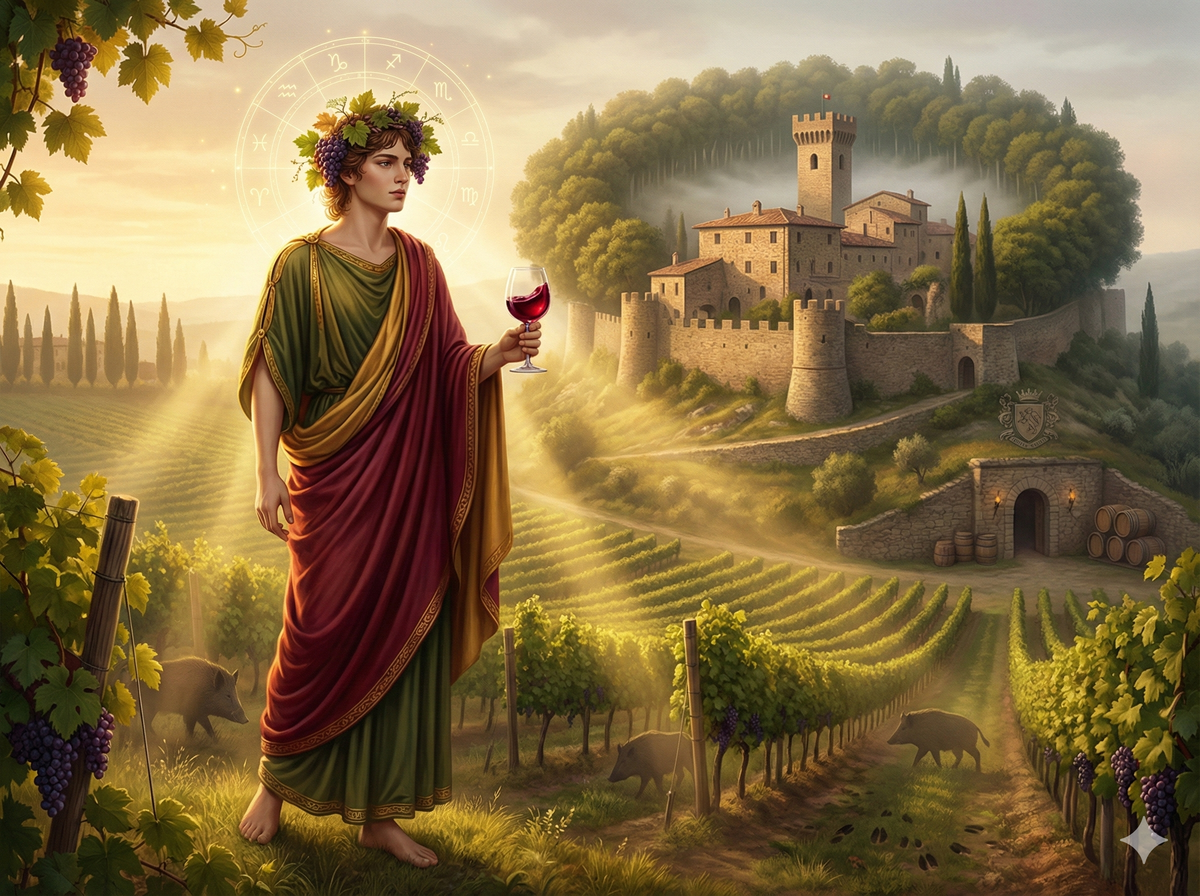
How Castiglion del Bosco Became One of Tuscany’s Most Enchanted—and Defiant—Wine Estates
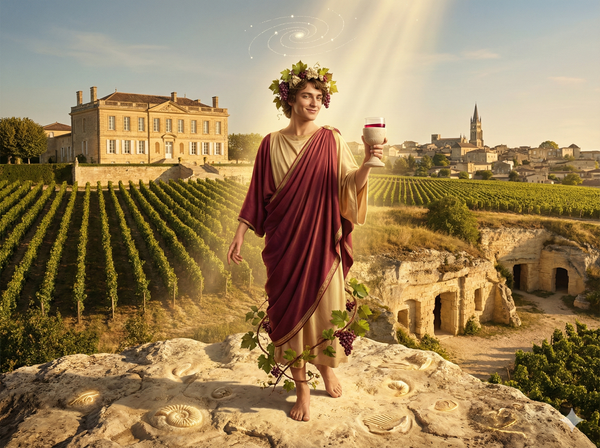
As told by Liber, god of the vine, metamorphosis, rebellion, and all things that ferment beneath the surface.
Prologue: Where the Forest Breathes and the Vine Remembers
Long before humans named it Castiglion del Bosco, before monks mapped its slopes or noble families carved crests into its stone walls… there was simply the forest.
A dense, whispering sprawl of oak and chestnut.
Wolves in the underbrush.
A hill crowned by a weathered stone watchtower.
Wind moving in ancient spirals.
And through the soil, beneath the hooves of medieval hunters and the sandals of wandering monks, the vine waited.
I, Liber, watched from above as the land stirred with potential. Tuscany has always been a place where transformation comes easily—where sunlight lingers long enough to ripen ambition and grapes in equal measure.
And so the story of Castiglion del Bosco begins as all great wine stories do:
A place of wildness, a people of vision, and a vine ready to rise.
The Early Roots: Sienese Nobles, Monks & Medieval Fire
Castiglion del Bosco is one of the oldest continuously producing estates in Italy, with documented origins dating back to 1100 AD.
In its earliest centuries, the estate sat squarely within the turbulent orbit of the Sienese Republic—a region brimming with merchants, artists, soldiers, and crusaders. The fortress at its heart served as a lookout, a shelter, a stone heartbeat.
The Gallerani Family (13th Century)
These early lords of the land nurtured both the forest and the vine. Their crest still hangs in the old borgo, a reminder of a time when wine was made for necessity, ritual, and diplomacy.
The Monks Arrive
Benedictine monks mapped the hillsides into terraces, introduced early vineyard cultivation, and recorded the first descriptions of the soils that would one day give birth to Brunello.
Their journals noted something unusual:
“La terra qui canta nella botte.”
“The earth here sings in the barrel.”
Ah, monks. Always so dramatic—no wonder I liked them.
From Medieval Stronghold to Renaissance Estate
Over the centuries, the estate passed through noble families, expanding and reshaping itself. The forest thrived, game roamed free, and vineyards curled over the rolling hills.
By the Renaissance, Castiglion del Bosco had become:
- a hunting retreat,
- a fortified agricultural estate,
- and a quiet center of early Tuscan viticulture.
The soils—galestro, clay, limestone, iron deposits—were already known to produce wines that were darker, deeper, more structured than neighboring villages.
The vine had begun its ascent.
The Birth of Brunello: A New Wine for a New Era
The 19th century changed everything.
Nearby Montalcino saw the rise of a visionary: Clemente Santi, and later Ferruccio Biondi Santi, who created Brunello di Montalcino, one of the first true single-varietal expressions of Sangiovese.
Castiglion del Bosco was among the founding members of the Consorzio del Brunello di Montalcino in 1967, a brotherhood of producers dedicated to elevating the region.
This is important—remember it.
While other estates floundered, fragmented, or resisted change, Castiglion del Bosco stepped forward, declaring:
“We will rise with Brunello. We will shape its future.”
And oh, how they did.
The Modern Renaissance: Ferragamo’s Vision & the Revival of a Sleeping Giant
In the early 2000s, the estate fell into new hands—those of Massimo Ferragamo, whose family name is synonymous with Italian craftsmanship and artistry.
Under his stewardship, Castiglion del Bosco underwent a breathtaking rebirth.
The Winery Reborn
- A state-of-the-art gravity-flow winery
- Precision viticulture
- Soil mapping and parcel separation
- Hand harvesting
- Aging cellars carved into the hillside
Everything echoed the old philosophy:
Elegance first. Power second. Identity always.
The Vineyards: Capanna & Beyond
The estate’s six major vineyard sites—including the famed Capanna—produce Brunello that is:
- deeply structured
- ruby-dark
- aromatically intense
- endlessly age-worthy
A blend of altitude, sunlight, and brutally well-drained soils gives the wines a signature tension and energy.
Sangiovese here is not shy.
It stands proudly, like a knight in polished armor.
A Marriage of Luxury, Landscape & Legacy
Today, Castiglion del Bosco is more than a winery—it is an entire medieval village revived into:
- a Relais & Châteaux luxury resort
- a private golf course (the only one inside a UNESCO World Heritage site)
- restored villas
- artisan workshops
- and a working agricultural estate
Guests wander stone alleys beneath terracotta roofs, tasting Brunello as the hills glow gold at sunset.
It is a place where the medieval past feels close enough to touch, and the future seems to rise in the glass.
The Wines: What the Vine Has to Say
Brunello di Montalcino DOCG
Structured, mineral, fiercely elegant.
Notes of cherry, tobacco, cedar, iron, and saffron.
Brunello Riserva
Deeper. Broader. A wine that remembers every year of its aging.
Campo del Drago
A single-vineyard jewel—dark, bold, volcanic in temperament.
Rosso di Montalcino
Youthful fire, wild cherry, vivacity.
Zodiaco Collection
Rare art-driven bottles celebrating the arc of the stars—an homage to the gods, if I may say so myself.
Liber’s Closing Toast
Castiglion del Bosco is not just an estate.
It is a spell woven into the Tuscan hills.
A forest that guards its secrets.
A castle that watches the centuries turn.
A vineyard that offers its heart to those willing to listen.
Raise your glass.
Taste the age of stone, the breath of forest, the pulse of Sangiovese, the memory of monks, hunters, nobles, and artisans.
Some estates make wine.
Castiglion del Bosco makes history—year after year, glass after glass.
— Liber