The Crimson Thread Beneath the Hills: Te Mata Coleraine 2018
A mythic, plant-forward guide to Te Mata Coleraine 2018 food pairing, weaving Gesh’s lore with vibrant, uniquely tailored dishes.


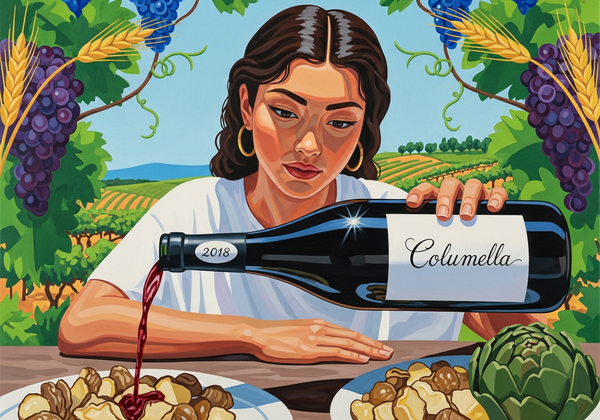
I pour the 2018 Coleraine as if parting a veil between seasons. The wine falls into the glass in a dark ribbon—garnet edged with a glow like embers hidden under ash. I give it an hour in a broad-shouldered decanter, because this is a young, firm-hearted Cabernet blend that needs space to stretch its limbs. At 16–18 °C, in a tall tulip bowl, its voice rises: cassis, warm stones after rain, cedar freshly split. I breathe with it, as I have breathed through millennia, half in the world of green leaves and half in the quiet dust of the underworld.
Coleraine is born in Hawke’s Bay, Aotearoa New Zealand, where Te Mata Estate tends its hillside vines above Havelock North. These slopes—gravel, silt, and river-sculpted terraces—grow Cabernet Sauvignon, Merlot, and Cabernet Franc with a natural tension between ripeness and cool-night clarity. The estate farms with sustainable, soil-first intention; not biodynamic, but close in spirit, with cover crops, careful canopy work, and an almost ceremonial respect for the living earth. Those choices matter: I have seen vineyards neglect their soils and fall silent. These, by contrast, hum.
The Wine’s Quiet Gravity
Coleraine 2018 opens with a certain gravitas—a still pool before the current pulls you under. Aromas drift upward: blackcurrant leaf, crushed violets, graphite, a trace of tobacco. On the palate, the wine moves with disciplined strength. Its acidity is keen, the kind that brightens rather than bites. Its tannins—those soft, drying threads woven from grape skins—grip like a promise rather than a warning.
In the underworld, I record the names of the dead in long clay tablets. Structure, order, and persistence matter to me. Coleraine has all three. The finish walks on and on, a steady footfall that reminds me of my brother Dumuzi returning each spring from the lower realm. Its fruit is pure, its herbal tones precise, as though shaped by lunar patience. Wines raised with attention to soil vitality often have this clarity, this sense of energy travelling upward from the roots.
Fire-Kissed Vegetables & Earthen Depths
Cabernet blends love fat and umami, but Coleraine 2018’s balance invites more imaginative partners than the usual suspects. I walk the gardens of the living and choose dishes that honour the wine’s depth without overwhelming its restraint.
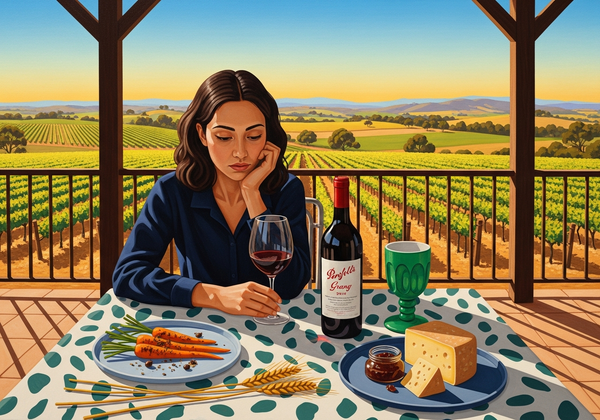
Consider charred celeriac steaks brushed with walnut miso, their edges smoky, their centres tender. Walnut’s earthy richness dovetails into the wine’s graphite line, while miso softens the tannins and amplifies the blackcurrant core. Or coal-roasted kūmara (sweet potato) split open and filled with rosemary-infused ricotta and crispy sage—a New Zealand-rooted dish that mirrors both the wine’s dark sweetness and its herbal lift.
These dishes speak the same language as Coleraine: earth, smoke, sap, and slow-built sweetness. They draw its aromatics upward while giving its tannins something to hold onto.
Bright Gardens, Lunar Acidity
The wine’s acidity is a guiding moon. It loves brightness, tang, and dishes that carry a pulse of life. So I turn to vegetables that keep their clarity even when roasted or grilled.
A tomato and tamarillo tatin—dark, caramelised, sweet-sour—brings out the wine’s red-fruited flicker and its savoury undertone. Tamarillo, with its tart, almost plum-skin bite, creates a subtle echo of Cabernet Franc’s herbal edge. Or try grilled asparagus with lemon oil and shaved hazelnut, a dish that, surprisingly, lets the wine’s floral notes bloom while hazelnut adds just enough fat for tannin to soften.
These aren’t pairings born from tradition; they’re born from the soil and the season, from what I see mortals gather when the days grow long.
A Single Mortal Tradition
I allow myself one quiet nod to Hawke’s Bay lamb—because even I, goddess of the vine, must honour local memory. A single slice, taken from a herb-smoked shoulder, cradles the wine’s tannins and amplifies its cedar-spice warmth. But it is merely a whisper in the story, not the centre.
When Wines Listen Back
When Dumuzi was hunted by galla demons, I learned the strength of silence: how holding one’s tongue can be a form of devotion. Coleraine listens in the same way. If you sit with it—truly sit—it reflects your state back to you. In candlelight, it becomes contemplative; over laughter, it becomes generous. Some wines merely accompany a meal. This one witnesses it.
Decant for an hour, pour with intention, and give it room. If you cellar bottles, know that between 2030 and the late 2030s the wine will reveal new depths: cedar turning to cigar leaf, cassis giving way to black tea, tannin smoothing into silk as soft as the shadows of my winter realm.
A Blessing for the Living Table
May your vegetables blister just enough to carry their sweetness; may your herbs bruise and release their perfumes; may your glass brim with a wine that knows both discipline and pleasure. Coleraine 2018 is already luminous, already steady. Honour it with dishes that have touched flame, soil, and time.