The Hill That Taught Bordeaux to Breathe: The Story of Troplong Mondot
Discover the story of Troplong Mondot — Saint-Émilion’s hilltop icon. From its 18th-century origins to modern organic mastery, explore how altitude, limestone, and time shaped one of Bordeaux’s most visionary estates.
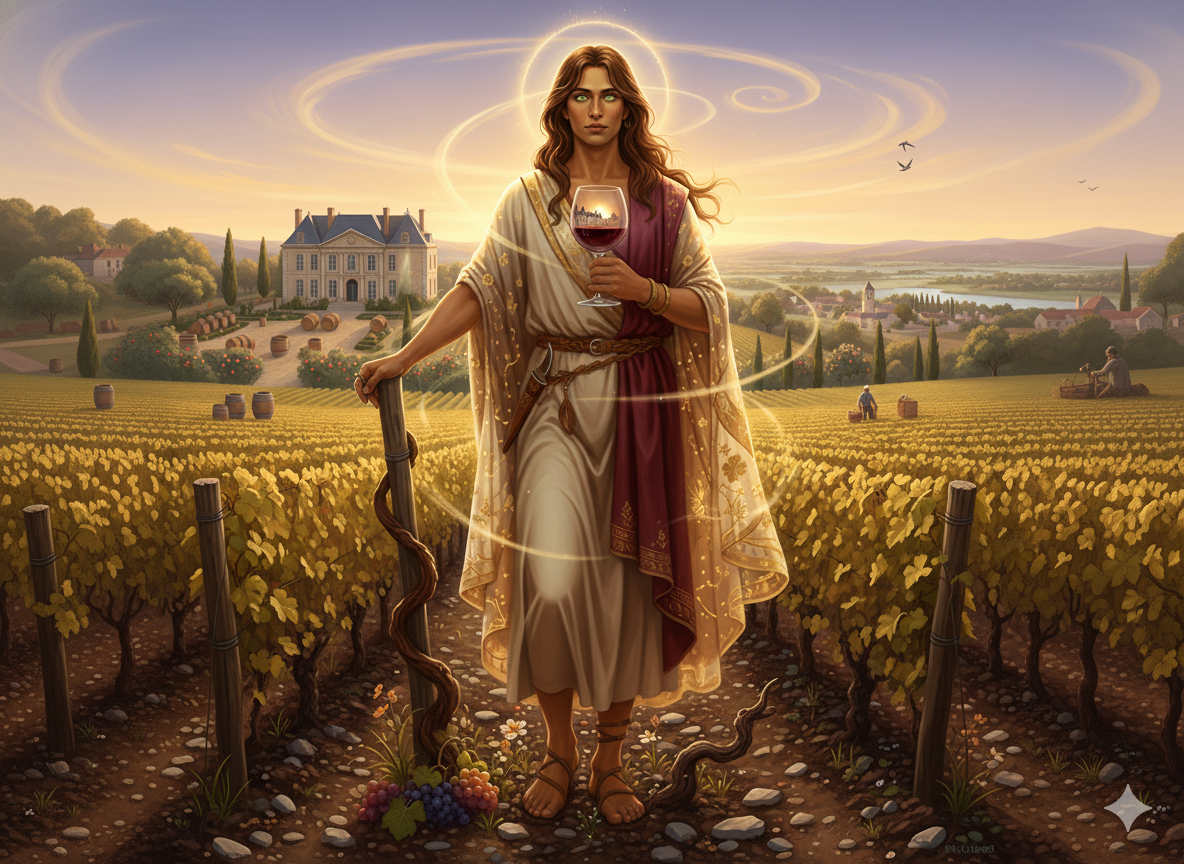
How a limestone crown above Saint-Émilion became one of Bordeaux’s most visionary estates — and why the gods still linger among its vines.
I. Prologue: A Hill, a God, and a View
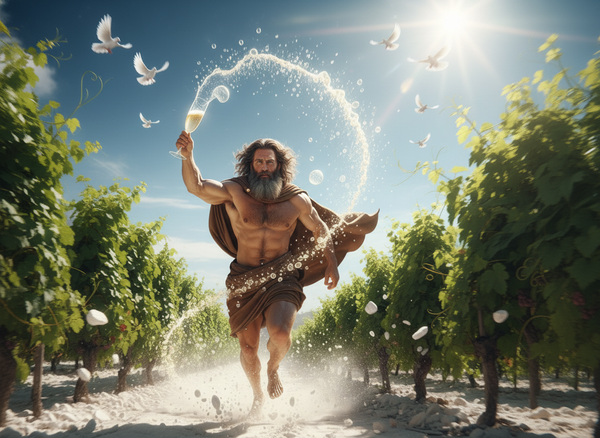
From my high seat above Bordeaux, I’ve watched many estates rise and fall — names that burned bright, then vanished into history like mist at dawn.
But one hill never fades: Troplong Mondot.
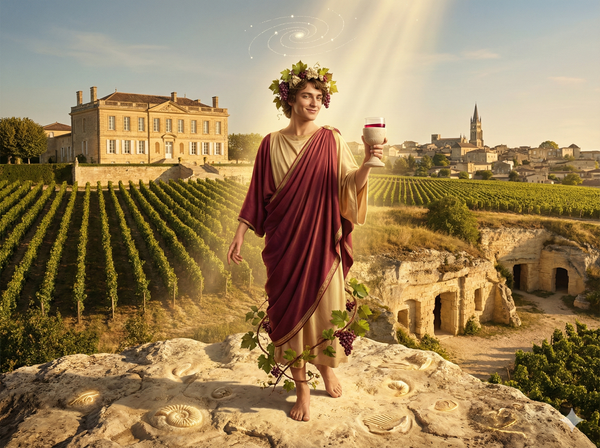
It sits above Saint-Émilion, 100 meters higher than most of its neighbors, commanding the landscape like a small, patient Olympus.
From here, one sees all — the patchwork of limestone and clay, the spire of the village church below, the slow shimmer of the Dordogne in the distance.
This is where I walk when I need to remember that power and grace can share the same breath.
And it’s where mortals, led by families of ambition and artisans of devotion, have made wine for centuries that speaks not of dominance, but of elevation.
II. The Beginning: A Vision on the Plateau
The story begins in the 18th century, when the Mondot family cultivated these slopes on Saint-Émilion’s highest plateau.
Their vineyards were small but perfectly placed — limestone at the top for freshness, clay-rich patches for depth, sunlight flooding every row.
Then, in 1850, a man of precision and daring, Raymond Troplong, acquired the estate. A lawyer by trade, he approached the vineyard as he did his craft — with intellect, patience, and faith in order.
He expanded the property, united the terroir under one name, and built the neoclassical château that still crowns the hill today.
Under his stewardship, the estate began to whisper its destiny — wines of intensity and balance, structured yet supple, touched by altitude and air.
The world began to listen.
III. The Land: Limestone, Clay, and Heaven
Troplong Mondot’s soul lies in its terroir — a unique composition of limestone bedrock capped with clay and flint, stretching across 33 hectares of undulating slopes.
The altitude, the highest in Saint-Émilion, brings a cooling breeze and delayed ripening — meaning grapes develop aromatic purity without losing tension.
The vines — predominantly Merlot, with Cabernet Franc and Cabernet Sauvignon — dig deep into the limestone, finding moisture even in drought and minerality in every drop.
Each row seems etched by geometry itself — sunlight tilting across perfectly ordered canopies, cypress and stone walls guarding the borders like sentinels.
When the wind rises at dusk, it carries the scent of crushed berries, dust, and chalk — a perfume of balance, the vineyard’s living heartbeat.
IV. The Craft: Precision Meets Poise
Troplong Mondot has never been content to follow. It has always refined.
Under the Valette family, who took stewardship in the 1930s, the château grew in reputation.
But it was Christine Valette, beginning in 1980, who transformed Troplong Mondot into a modern legend.
She was a scientist of sensation — introducing low yields, meticulous sorting, and vineyard parcel selection long before it became fashionable.
Her wines embodied power wrapped in velvet — rich, muscular Merlot laced with minerality and grace.
In 2006, her efforts were crowned when the estate received Premier Grand Cru Classé B status in the Saint-Émilion classification.
After her passing in 2014, the torch passed — but not dimmed.
V. The New Era: Altitude, Purity, and Renewal
In 2017, Troplong Mondot entered its current era when it was acquired by SCOR Group, who brought in a visionary new team led by Aymeric de Gironde (formerly of Cos d’Estournel).
Their mission: not reinvention, but clarity — to let the hill speak even more clearly.
They reduced new oak, lengthened aging, and introduced gravity-flow cellars, preserving freshness and texture.
Organic farming replaced convention; the vineyard became an ecosystem rather than an industry.
The new wines — starting with the 2018 vintage — are a revelation: lifted yet profound, dense yet transparent, combining the depth of Right Bank Merlot with the verticality of limestone.
In the words of those who taste it: it feels alive.
VI. The Wines: Breath Made Liquid
🍷 Troplong Mondot
The flagship — Merlot’s dark velvet drawn taut by altitude. Aromas of black cherry, violets, truffle, and wet stone. Texture like silk laid over bone.
🍷 Mondot (Second Wine)
Youthful elegance — bright fruit, chalky energy, an invitation to the hill’s personality.
🍷 The Whites & Experimentals
A newer vision: small-production whites from limestone plots, glowing with minerality and subtle salinity — a whisper of what the future might hold.
Every bottle from this estate is not just a wine but a conversation between air, stone, and will.
VII. The Estate Today: The Hill Reborn
Today, Troplong Mondot stands not only as one of Saint-Émilion’s finest properties, but as a model of sustainable luxury.
Its cellars and hospitality spaces have been redesigned to blend seamlessly into the landscape.
The estate restaurant, Les Belles Perdrix, serves dishes sourced from the property’s own gardens and orchards.
Guests who stay on the hill can walk through vines that shimmer at sunset, where every grape seems to pulse with quiet life.
It is not a monument — it is a living rhythm, repeating the same sacred pattern each season: growth, fire, harvest, rest, rebirth.
VIII. Liber’s Reflection: The Air at the Top
I have seen power. I have seen beauty.
But what I revere in Troplong Mondot is restraint.
This is not the power of thunder, but the pressure of silence — the stillness before a note is played.
The wines breathe, evolve, and remind mortals that elevation is not about dominance, but about perspective.
Every sip is an ascent — from soil to stone to sky.
And when the glass empties, one realizes that to stand at the top is not to conquer, but to listen.
🍇 Final Benediction
Troplong Mondot is not simply a château — it is a compass.
It points upward, always, reminding both mortals and gods that perfection is not found in power, but in patience.
And so, I — Liber, keeper of balance and breath — bow to the hill that taught Bordeaux to rise.