The House That Never Blinked: The Story of Bollinger
Explore the story of Bollinger — Champagne’s house of depth, wit, and endurance. From Lily Bollinger’s wartime legacy to oak-aged precision and Bond-fueled fame, discover how timeless craft forged the soul of true Champagne

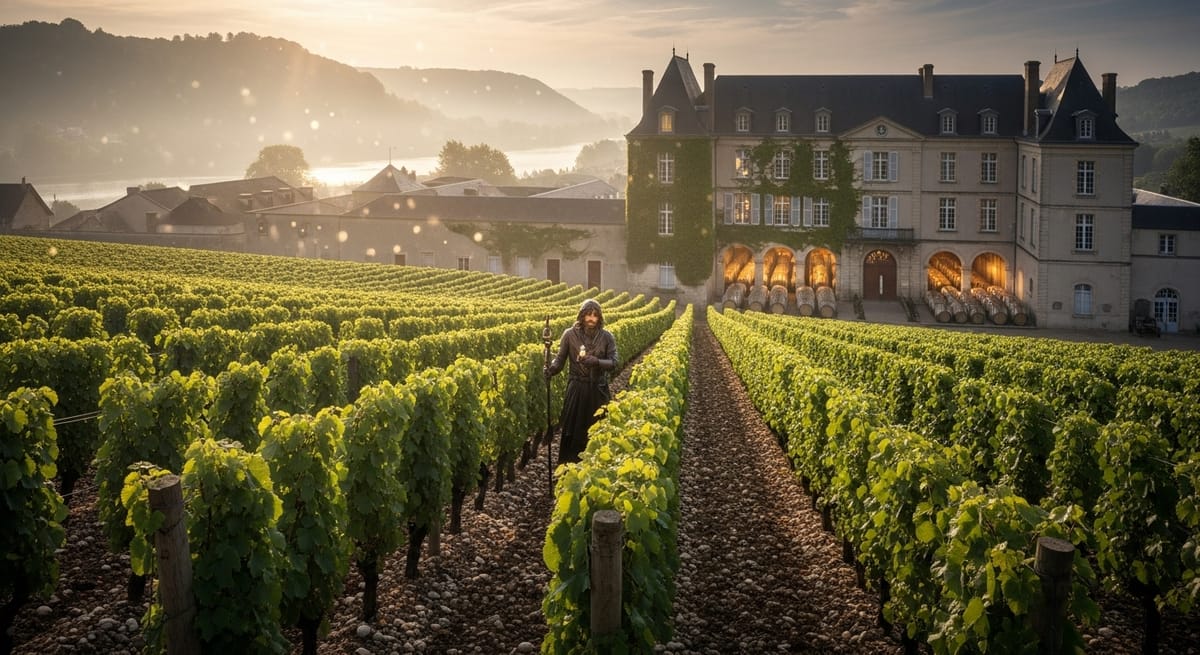
How a family of rebels, widows, and oak barrels built Champagne’s boldest legend — with a wink, a whisper, and a thousand tiny explosions of grace.
I. Prologue: The Music of Pressure
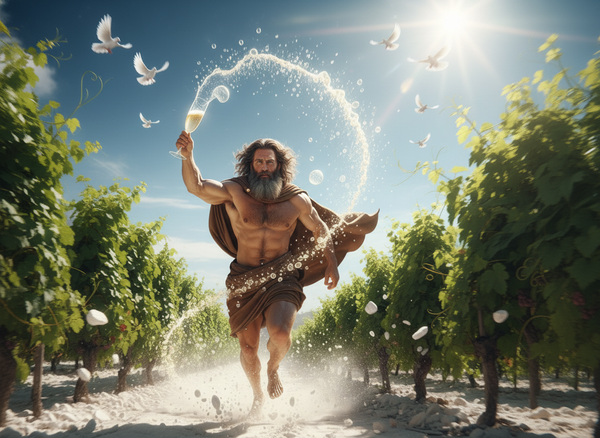
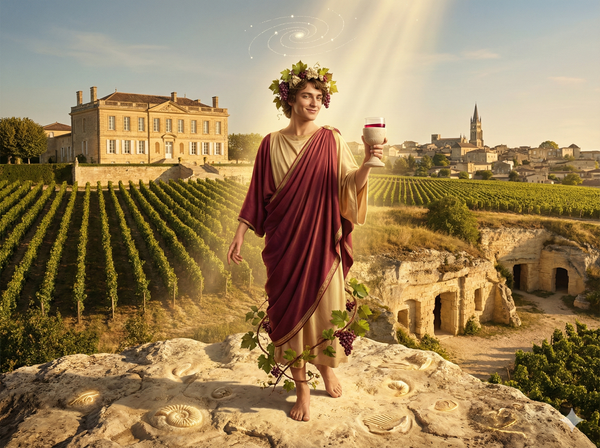
Champagne, to most mortals, is a symbol of joy. To me — Liber, god of wine — it is a hymn to tension.
It is wine captured mid-transformation, held just before release. It is both serenity and chaos in one luminous glass.
And if the region has many poets, only one has ever truly mastered discipline under pressure — the house of Bollinger.
Bollinger does not flirt. It does not parade. It endures.
It has survived wars, widows, and fashion by doing the simplest, hardest thing of all: staying itself.
II. The Beginning: A Gentle Conspiracy
The story begins in 1829 in the village of Aÿ, nestled along the Marne River, where the chalk meets the forested hills of Champagne.
Three conspirators — Jacques Bollinger, Paul Renaudin, and Joseph Villermont — came together to found a new house.
Villermont had the land but could not trade under his noble name. Renaudin had the palate and the precision. Bollinger, the young German from Württemberg, had the energy, the ambition — and the appetite for risk.
Together, they forged a pact that would change Champagne forever.
Where others chased novelty, they built structure.
Where others sought speed, they sought time.
The first vines were planted in Aÿ, Verzenay, and Cuis, chosen not for ease but for strength. The founders were builders, not marketers. They wanted wines that could speak after silence.
III. The Roots: Pinot Noir and the Courage of Gravity
Even then, Bollinger knew what it stood for: depth, not dazzle.
While other houses leaned toward Chardonnay’s flirtatious brightness, Bollinger rooted itself in Pinot Noir — the red soul of Champagne.
Pinot Noir from Aÿ, Bouzy, and Verzenay gave the wines a muscular backbone, an earthy gravitas that would become their signature.
This choice made the house distinct — serious, textured, quietly confident.
Every bottle whispered the same truth:
“We are not here to sparkle. We are here to resonate.”
IV. The Widow Who Refused to Sit Down
If Jacques Bollinger built the house, Lily Bollinger made it immortal.
When her husband Jacques Bollinger II died in 1941, Lily — elegant, witty, and entirely unafraid — took the reins during World War II, while German troops occupied Champagne.
Under her stewardship, the house expanded its vineyards, acquired old barrels, and deepened its devotion to traditional methods.
She became the face of the house — not through pomp, but through personality.
Her words still echo like scripture in my halls:
“I drink Champagne when I’m happy and when I’m sad.
Sometimes I drink it when I’m alone.
When I have company, I consider it obligatory.
I trifle with it if I’m not hungry and drink it when I am.
Otherwise, I never touch it — unless I’m thirsty.”
It was wit disguised as philosophy — and it defined Bollinger’s soul: passionate, precise, utterly unpretentious.
V. The Craft: Time, Wood, and Quiet Obsession
To this day, Bollinger’s genius lies not in invention, but in refinement.
It remains one of the last Champagne houses to age and ferment extensively in oak barrels — small, old, perfectly neutral vessels that breathe life into the wine without overpowering it.
Its labyrinthine cellars in Aÿ hold thousands of barrels, some over 40 years old, lined up like relics of worship.
This contact with wood brings texture, complexity, and the quiet whisper of oxidation — giving Bollinger its inimitable depth and spice.
The wines are aged on lees for far longer than the law demands.
The reserve wines — kept in magnums under natural cork — are catalogued with obsessive precision, a library of flavor that spans decades.
Even the riddling and disgorgement — the final stages of Champagne’s alchemy — are done with care verging on reverence.
Every bottle feels like it has been raised, not made.
VI. The Wines: Architecture in Motion
Bollinger’s range is small, deliberate, and architectural. Each cuvée feels like a room in the same house — carved from stone and oak, designed for endurance.
- Bollinger Special Cuvée: The heartbeat of the house — rich, creamy, and impeccably balanced. Dried fruit, toasted brioche, baked apple, and chalk dust. A wine that seems to know exactly who it is.
- La Grande Année: The flagship vintage — dense yet graceful, aged in oak and then for years on lees. It tastes like time given shape.
- R.D. (Recently Disgorged): Lily’s masterpiece. First released in 1967, it’s Champagne aged for decades and disgorged late, offering the power of maturity with the freshness of youth. A paradox bottled.
- Vieilles Vignes Françaises: The crown jewel — made from ungrafted Pinot Noir vines in two tiny pre-phylloxera plots. It is history in liquid form, a reminder that true rarity is rooted in memory.
VII. The Philosophy: “There is No Shortcut to Soul”
Bollinger does not chase trends. It never has.
Its wines are built for character, not consensus.
In an age of speed, they remain slow.
In an era of stainless steel, they still cherish oak.
In a world of precision, they preserve instinct.
This is why Bollinger endures — not just as a Champagne, but as a language: the dialogue between pressure and patience, wood and air, wit and will.
VIII. The House of Bonds and Battles
Bollinger’s name became synonymous with elegance and daring in popular culture, too — the Champagne of James Bond, appearing first in Live and Let Die (1973).
It fit perfectly: 007’s favorite drink was made by a house that shared his character — sharp, disciplined, indulgent only when deserved.
Yet beyond the glamour, Bollinger remains a family-owned estate, fiercely independent, guided by the same precision that built it nearly two centuries ago.
Each vintage is a reminder that even under immense pressure, some spirits never break — they refine.
IX. Liber’s Reflection: The Art of Restraint
Among all my mortal disciples, few have understood balance as profoundly as Bollinger.
Where others chase effervescence, they chase resonance.
Where others market pleasure, they craft persistence.
Their wines are the embodiment of my oldest lesson:
“The divine is not in excess — it is in control.”
To drink Bollinger is to taste the moment just before release — the instant before creation bursts forth.
It is the sound of a god taking a breath, and choosing not to speak.
🍾 Final Benediction
Some houses sparkle.
Bollinger hums — rich, resonant, eternal.
It is Champagne with bones and memory, elegance forged by discipline, and the music of pressure turned into poetry.
And I, Liber, raise my glass to that rarest of things: power that knows when to pause.