The Hymn of Limestone and Moonlight: Domaine Georges Roumier Musigny 2017
A mythic Domaine Georges Roumier Musigny 2017 food pairing—Geshtinanna’s ode to limestone, starlight, and the sacred alchemy of the vine.

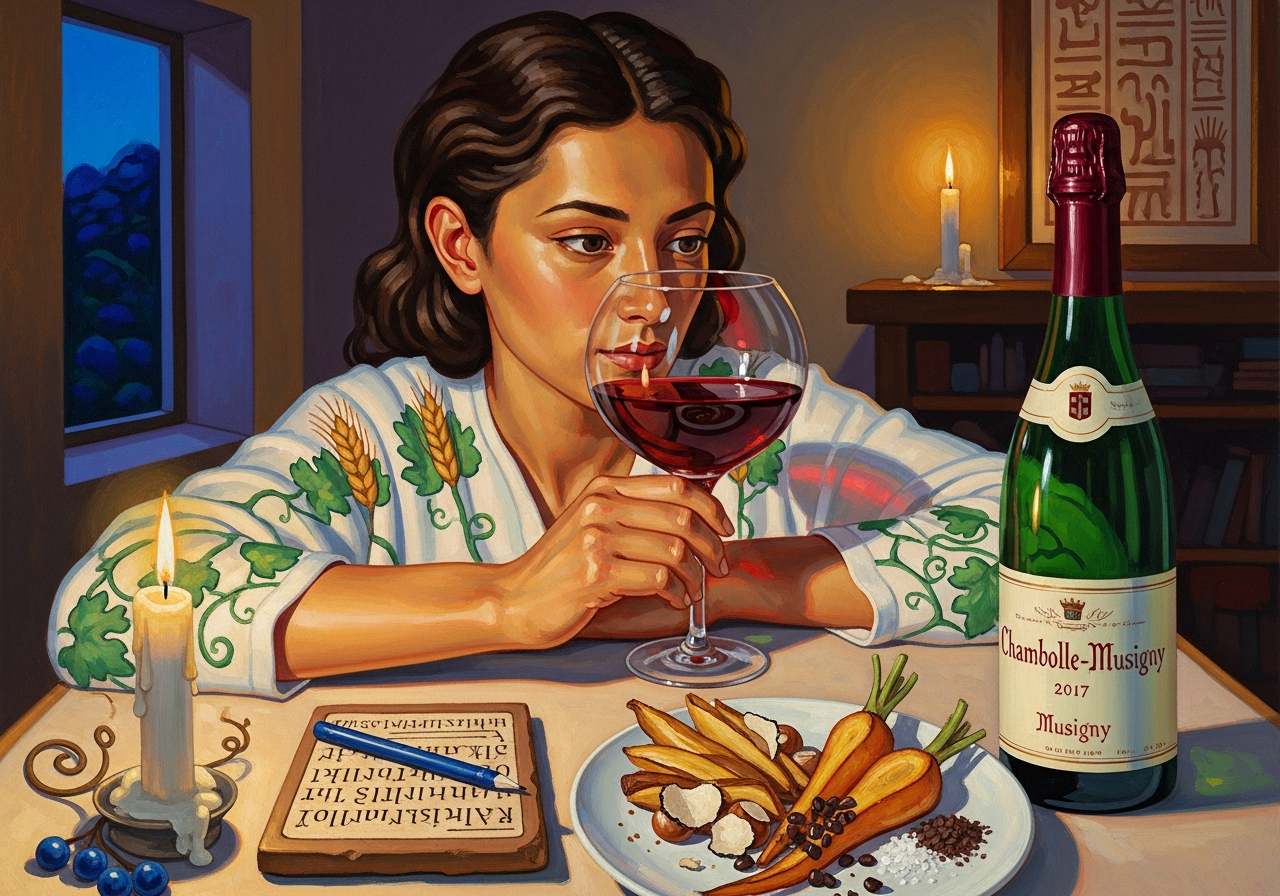
The first pour feels like a secret revealed in darkness—garnet glinting ruby beneath candle flame, a color pressed from twilight itself. I decant it with ceremony, letting it rest an hour as the wine climbs slowly from the underworld of the bottle toward the living air. At 17 °C it stirs, exhaling redcurrant leaf, violet dust, and cedar bark—notes that move like dreams I once recorded in clay. The glass, wide and round, becomes an oracle’s bowl. I watch as Musigny’s spirit begins to speak, and I listen as one who has listened to roots in the dark.
The Vineyard of Whispering Stone
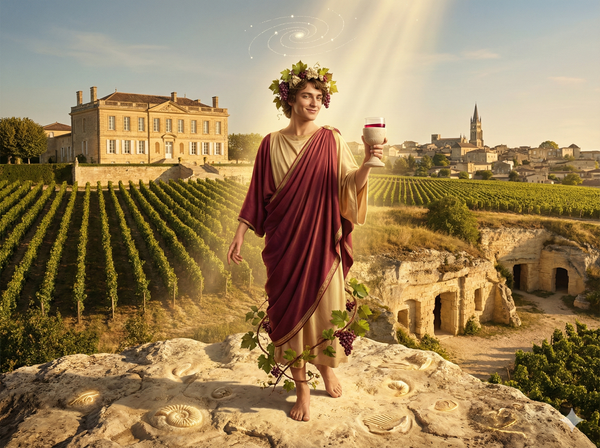
On the limestone ridge of Chambolle-Musigny, where night air shivers over pale marl, the vines of Musigny Grand Crustretch toward the moon. Domaine Georges Roumier—founded in 1924, stewarded now by Christophe Roumier—tends them biodynamically, in harmony with the same celestial tides that once governed the floods of my Sumerian plains. Here, the vine is both pen and prayer: Pinot Noir writing its verses through soil and star. The 2017 vintage was a reprieve, a year of calm breath after tempests—its wines marked by clarity, by the clean edge of equilibrium, like sunlight drawn in ink.
The Breath of Living Earth
Roumier’s Musigny 2017 unfolds with patient grace: pomegranate and damson at the rim, a heart of lilac, graphite, and crushed stone. The texture—silk over limestone—is both supple and firm, its tannins fine as powdered shell. Acidity runs bright and mineral, like water cutting through chalk. Beneath these sensations lies that rare electricity only biodynamic soils yield: the pulse of microbial life transmuted into flavor, the vineyard’s heartbeat captured in glass. Taste long enough, and you’ll sense it—a hum that feels older than speech. It is not just Pinot Noir. It is breath, turned wine.
The Table Between Worlds
I, Geshtinanna, have sat between heaven and soil, between feast and elegy. Musigny 2017 invites such balance at the table. Let the meal be a mirror to its dual nature—earthly, luminous, and alive. Begin with roasted salsify in hazelnut milk, finished with white truffle and thyme smoke. Its sweet, root-born flesh reflects the wine’s mineral core, while the hazelnut rounds its edges and the truffle’s perfume rises to meet its violet scent. It is a dish for contemplation rather than appetite.
Then offer grilled king oyster mushrooms brushed with black sesame and soy, layered over fermented barley and burnt leek ash. The dish hums in minor key—the sesame’s depth and umami awakening the wine’s savory grace, the char recalling the faint echo of its oak. Together they taste of dusk: soil cooling, stars ascending.
And if a mortal insists upon a memory of flesh, let it be pigeon breast glazed with date syrup and rose vinegar, served beside parsnip purée and roasted fig. It is not the bird that matters but the balance of sweet, acid, and smoke—each a chord resonating with Musigny’s deeper notes.
The Ritual of Roots and Flame
Biodynamic viticulture is a liturgy of patience, the farmer’s answer to the lunar hymn. Compost is stirred as if invoking breath; pruning obeys the rhythm of celestial bodies. I, who once kept the ledgers of the dead, recognize this devotion to unseen order. Roumier’s vines move in quiet covenant with the cosmos, translating gravity into grace.
To honor that rhythm, serve caramelized parsnips with cacao nib and smoked sea salt, a dish that mirrors the wine’s fine balance of sweetness and minerality. The bitterness of cacao draws out its structure; the salt echoes its limestone tang; the parsnip’s caramel hums against its lingering spice. Eat slowly. Listen. Each bite is a turning season.
The Resurrection of the Vine
Every bottle is an act of descent and return. The grapes sink into silence, the wine rises reborn. Roumier’s Musigny 2017 carries this rhythm within it—the gravity of limestone and the lift of starlight. Pour it at dusk and watch it change by candlelight: from cherry to plum, from silk to smoke, from voice to echo.
In its final glass, there is stillness—the kind I once knew in the underworld, before spring’s ascent. Musigny does not shout; it endures. It teaches that all beauty is cyclical, all life fermented from death, and all soil remembers.