The Miner’s Symphony: The Story of William Fèvre and the Soul of Chablis
Discover the story of William Fèvre — the man who rebuilt Chablis from chalk and memory. From fossil-rich soils to Grand Cru precision, explore how purity, patience, and limestone shaped Burgundy’s most brilliant Chardonnay
How one man reclaimed the ancient seabed of Burgundy, coaxed the taste of fossils into wine, and built an empire of light beneath the chalk.
I. Prologue: The Sound of Stone
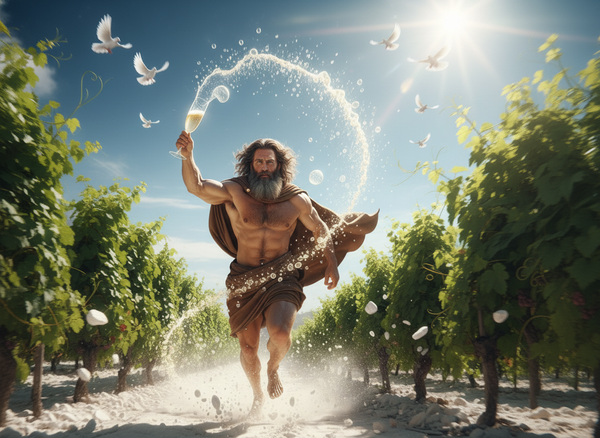
There are places where I, Liber, must speak softly — where even a god’s breath could disturb the perfection of silence.
Chablis is one of them.
This is not the Burgundy of opulent reds and roaring oak.
This is the land of limestone and light, of vines rooted in ancient seashells and whispering winds.
It is a landscape that rewards patience and punishes pride.
And among its cold hills, no name echoes louder — or more quietly — than William Fèvre.
He is the man who heard the voice of the Kimmeridgian soil and turned it into a symphony.
II. The Beginning: The Man Who Came Home
The year was 1957 when William Fèvre, descendant of a long line of Chablis growers, founded his own estate in the village that bears the region’s name.
At the time, Chablis was recovering from catastrophe — frost, phylloxera, and war had reduced its vineyards to a fraction of their historic size. The great white of France had been humbled.
But William was not interested in nostalgia; he was interested in resurrection.
He started small — a few hectares inherited from his family — and began expanding, parcel by parcel, with the precision of a cartographer and the fervor of a believer.
By the end of the 20th century, Domaine William Fèvre had grown to over 70 hectares, including 15 Premier Cru and 6 Grand Cru vineyards — one of the largest and most respected holdings in all of Chablis.
He did not just rebuild Chablis; he redefined it.
III. The Land: Kimmeridgian Bones and Celestial Light
To understand Fèvre is to understand Chablis itself — and Chablis begins not with vines, but with fossils.
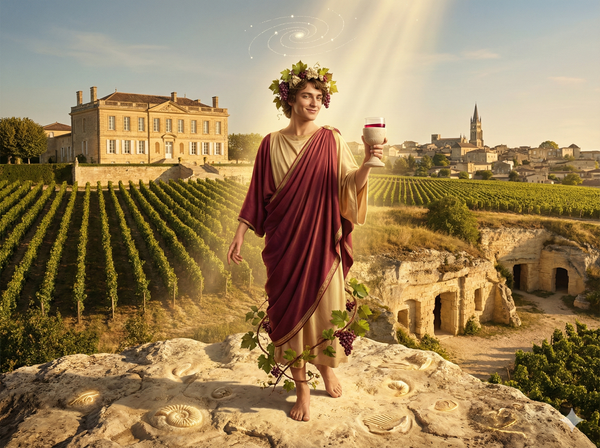
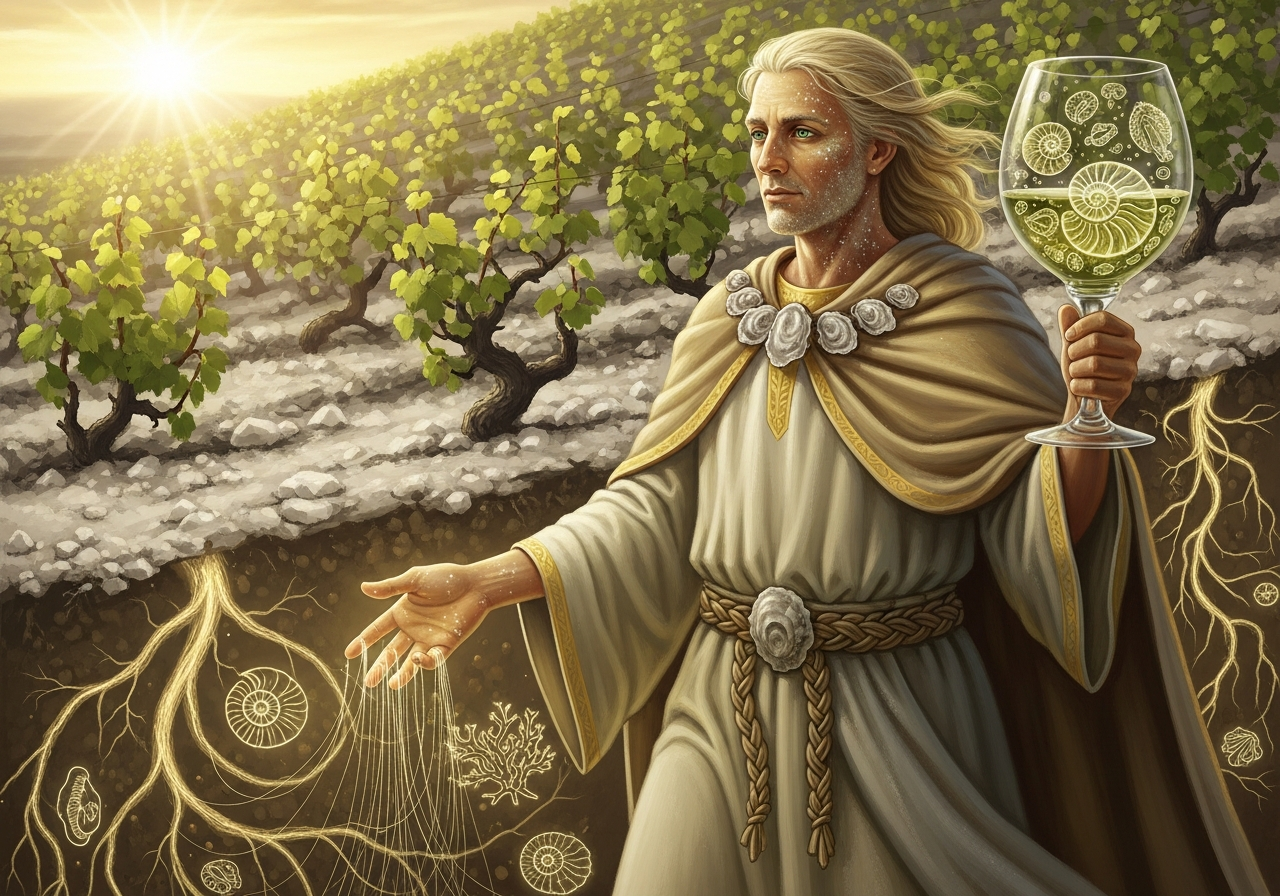
Some 150 million years ago, this land was covered by a warm, shallow sea. The creatures that swam in it — tiny oysters and marine shells — now form the Kimmeridgian limestone that defines the region’s terroir.
Each vine root reaches down through these layers of crushed shells, drinking ancient salt and stone.
The result? A wine that tastes like memory made liquid — chalk, smoke, citrus, and sea breeze.
William Fèvre saw in this geology a kind of holiness. He once said that “to grow Chardonnay in Chablis is not to make wine, but to let the earth breathe.”
And so he did.
IV. The Craft: Purity Above All
Fèvre’s philosophy was simple: precision and respect.
He sought clarity over excess, structure over showmanship.
In the cellar, he rejected heavy oak and manipulation, insisting instead on stainless steel and large, neutral barrels that allowed the vineyard to speak unfiltered.
His wines were not built for applause, but for contemplation — Chablis in its purest dialect.
Every decision, from pruning to bottling, was designed to preserve the minerality and tension that define the region.
Even today, the name “Fèvre” on a label guarantees not lushness, but luminosity.
V. The Transformation: Henriot and the Modern Era
In 1998, after four decades of leadership, William Fèvre sold the estate to the Henriot family, proprietors of Champagne and Bouchard Père & Fils in Beaune.
Under their stewardship — with Didier Séguier at the helm — the estate evolved without losing its soul.
Sustainable viticulture became the guiding principle:
- Organic practices in the vineyards.
- Reduced yields for concentration.
- Gentle pressing and natural yeasts.
The results have been nothing short of transcendent.
The Grand Crus — Les Clos, Valmur, Bougros, and Vaudésir — remain benchmarks of crystalline power, while the Premier Crus (like Montée de Tonnerre and Fourchaume) deliver tension and grace in equal measure.
The wines are quiet, yes — but within their stillness, they roar.
VI. The Taste: The Sea Remembered
To drink William Fèvre Chablis is to taste restraint elevated to rapture.
Each glass holds the ghost of the ocean floor — the chalk’s cool hand, the iodine tang of shell and salt, the subtle shimmer of citrus oil.
The Petit Chablis sings like wet limestone after rain; the Village is all green apple and flint.
The Premier Crus add layers of honey, almond, and smoke; the Grands Crus, like Les Clos, achieve the sublime — weightless density, depth without heaviness, eternity distilled.
There is no ornamentation here, no luxury — only precision so fine it feels divine.
VII. The Legacy: Purity as Power
Today, William Fèvre stands as both legend and legacy — a name synonymous with the rebirth of Chablis and its eternal dialogue between earth and air.
He proved that the truest wines are not created by force, but revealed through patience.
That terroir is not something one owns, but something one listens to.
Even now, decades after his first harvest, his vineyards hum with that same quiet electricity — the pulse of the planet itself, slowed into rhythm by human care.
I, Liber, recognize in that devotion the mirror of my own: the endless pursuit of transformation without distortion.
VIII. Liber’s Reflection: When Stone Becomes Song
Of all my children — the growers, the dreamers, the alchemists — few have honored the vine as faithfully as William Fèvre.
He did not seek worship, only understanding.
And in doing so, he taught mortals to taste time itself.
Chablis is the wine of the patient, the precise, the poet.
It is the place where discipline becomes beauty, and where even I must bow to the majesty of limestone.
🍇 Final Benediction
Some wines express fruit.
William Fèvre’s Chablis expresses silence — the sacred pause between the ocean’s last breath and the vine’s first leaf.
And in that pause, the gods are listening.