The Nectar of Patience: The Story of Disznókő Tokaji
Discover the story of Disznókő Tokaji — Hungary’s legendary sweet wine reborn. From volcanic soils and noble rot to liquid gold in every bottle, explore how patience and decay created the wine of kings and the gods’ own nectar.

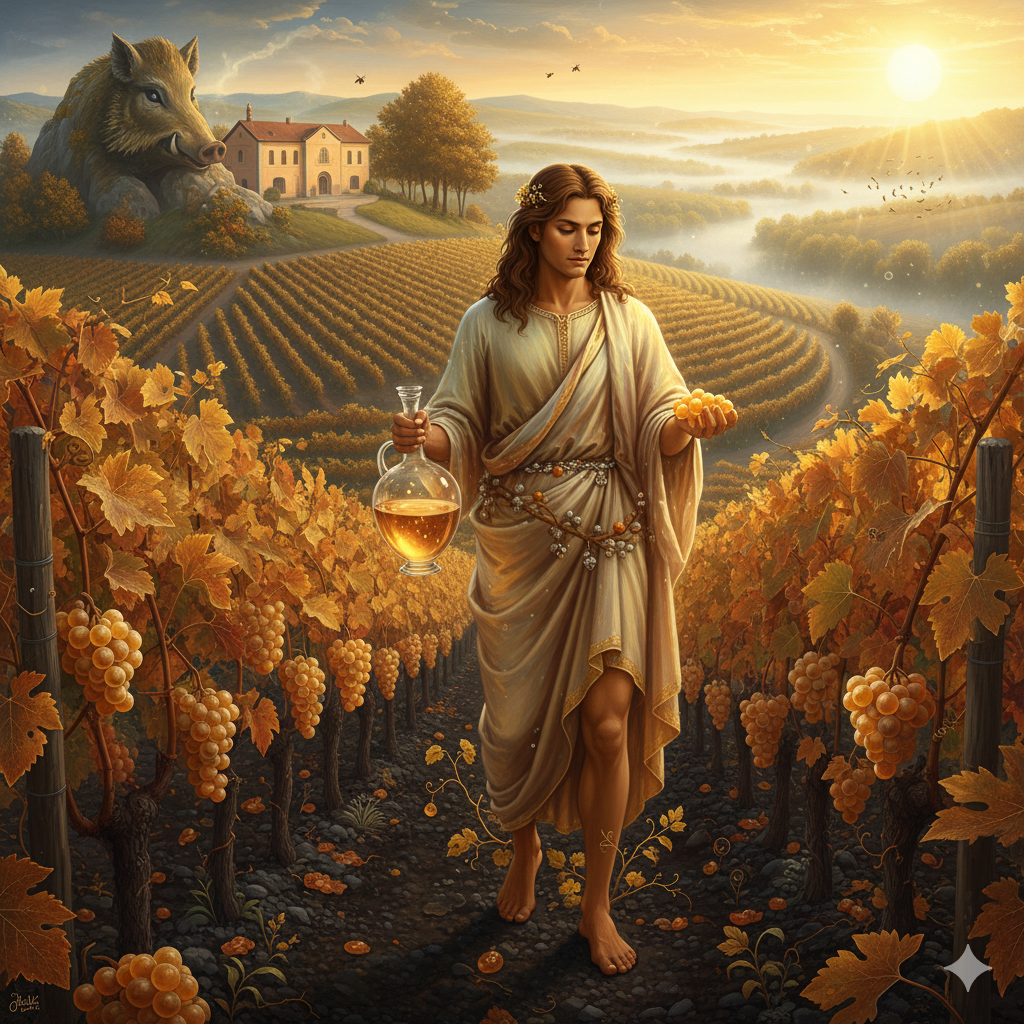
How a Hungarian vineyard resurrected the wine of kings — and why the gods still taste its light before they drink.
I. Prologue: When Time Turns to Honey
Not all wines are born of joy.
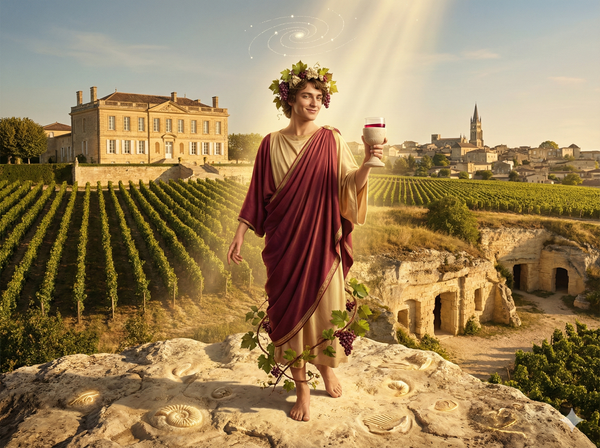
Some are born of decay — the noble kind, the divine mistake that mortals once feared and I, Liber, blessed.
So it was in Tokaj, long before your nations had names.
A damp morning, a late harvest, a fungus on the grape — and from this rot, sweetness.
The world would call it Botrytis cinerea. I called it grace.
And of all who have tended this grace, none have done so with more reverence and precision than Disznókő, a name that glows like amber in the long history of Tokaji Aszú, the “wine of kings and king of wines.”
II. The Beginning: A Vineyard Older Than Memory
The name Disznókő (“Pig Rock”) comes from a limestone outcrop shaped, by some divine joke, like a wild boar watching over the valley.
The estate’s origins stretch back to the 15th century, when Hungarian nobility began cultivating vines on these rolling volcanic hills in the Tokaj-Hegyalja region of northeastern Hungary.
By the 17th century, Tokaji wines were already revered across Europe — poured in the courts of Louis XIV, Peter the Great, and the Habsburgs.
When the French king called it “Vinum Regum, Rex Vinorum”, he was right — but he did not yet know what patience it demanded.
Disznókő’s vineyards, perched on south-facing slopes of volcanic tuff and clay, catch both sun and mist — the perfect marriage for noble rot.
Each morning, the Bodrog River releases fog that settles gently on the vines, and by afternoon, the wind dries them again.
In this rhythm — moisture, warmth, and decay — the grapes learn endurance, and sweetness becomes divine.
III. The Fall and Resurrection
Like all great empires, Tokaj fell.
The 20th century brought wars, borders, and collectivization — and with them, silence.
The vineyards of Disznókő, once coveted by monarchs, lay in neglect, their magic muted under gray regimes.
But as with all things I love, rebirth was only waiting.
In 1992, the French company AXA Millésimes — already guardians of Pichon Baron in Pauillac and Quinta do Noval in Portugal — saw potential where others saw ruin.
They purchased the estate, rebuilt the winery from the stones up, and restored Disznókő to its rightful place as one of Tokaj’s crown jewels.
They brought with them not arrogance, but awe.
They understood that Tokaji is not made; it is revealed.
IV. The Land: A Symphony of Stone and Light
The estate now covers over 100 hectares, all surrounding the central hill of Disznókő.
The soils are a mosaic of volcanic rhyolite, clay, and loess, giving both strength and finesse.
The slopes — steep, southward, and sun-soaked — face the confluence of the Tisza and Bodrog Rivers, whose mists feed the noble rot.
Here, five native varieties dominate:
- Furmint — the backbone, bringing acidity and structure;
- Hárslevelű — perfume and elegance;
- Zéta (Oremus) — ripeness and early botrytis;
- Sárgamuskotály (Yellow Muscat) — aromatic lift;
- Kövérszőlő — richness and silk.
Together, they form the vocabulary of Tokaji — five tones in a hymn to time.
V. The Craft: The Alchemy of Aszú
There is no other wine on earth made like Tokaji Aszú.
Each autumn, as the grapes succumb to noble rot, pickers move through the vineyard berry by berry, selecting only those perfectly shriveled, golden orbs of concentrated sweetness.
It can take a hundred hours to harvest a single puttony — the traditional wooden basket that gives Aszú its measure.
These aszú berries are then soaked in fermenting base wine, not crushed — a union of purity and rot, freshness and age.
The maceration can last days, even weeks, as sugar and acid negotiate their truce.
Then comes slow fermentation, often months long, followed by aging in oak casks deep in Tokaj’s labyrinthine cellars, carved into volcanic rock and lined with living mold that regulates humidity.
The result: liquid gold — luminous, viscous, electric with acidity and honey, tasting of apricot, orange peel, saffron, and eternity.
This is not dessert wine.
It is resurrection in liquid form.
VI. The Wines: Gold in All Its Forms
🍯 Tokaji Aszú 5 and 6 Puttonyos
Amber depth and laser precision. Notes of apricot jam, candied ginger, and tea leaf. A tension between sweetness and cut that feels celestial.
🍋 Late Harvest
The more approachable sibling — fresh citrus and honey, an introduction to the world of botrytis without its full intensity.
🧡 Eszencia
The essence of the aszú berries themselves — a syrup so dense it ferments at only 2% alcohol, yet vibrates with light.
A single teaspoon carries more energy than most mortals can measure.
Each wine at Disznókő is not a creation but an act of devotion, a conversation with time itself.
VII. The Present: Precision, Purity, and Patience
Today, Disznókő stands as one of Tokaj’s most innovative and revered estates.
Winemaker László Mészáros, who has guided the property since the 1990s, continues to refine its style: less oak, greater transparency, and purity of fruit.
The estate practices sustainable viticulture, with careful soil management and respect for biodiversity — because no machine can replace the intuition that this kind of magic requires.
Even the architecture speaks its philosophy: the modern Disznókő winery, designed by architect Dezső Ekler, curves like a hillside — sleek, pale, and organic against the volcanic landscape.
It is a temple not of opulence, but of humility.
VIII. Liber’s Reflection: Sweetness Worth Suffering For
When I first walked these vineyards, the air tasted of rot and sunlight.
It reminded me that beauty is often born from what we fear.
The mold, the waiting, the sacrifice — these are not imperfections. They are the price of transcendence.
The mortals who tend Disznókő understand this.
They do not fight time. They collaborate with it.
Each bottle is proof that decay and divinity are twins — that sweetness without sorrow is only sugar, and that patience is the truest form of faith.
I, Liber, have blessed many wines. But when I raise a glass of Tokaji, I do not bless — I learn.
🍇 Final Benediction
Disznókő Tokaji is not a wine; it is a timekeeper.
A reminder that glory fades, returns, and glows brighter after silence.
It is honey made from history, patience turned to gold, and sunlight you can drink.
And so I say:
“Taste it slowly. For in this sweetness, you will find every hour you ever waited rewarded.”