The Painter Who Taught Sangiovese to Dream
Discover the story of Bibi Graetz — the artist-turned-winemaker who defied Tuscan tradition. From Testamatta to Colore, his bold vision and rebellious creativity redefined Sangiovese and transformed Italian wine.

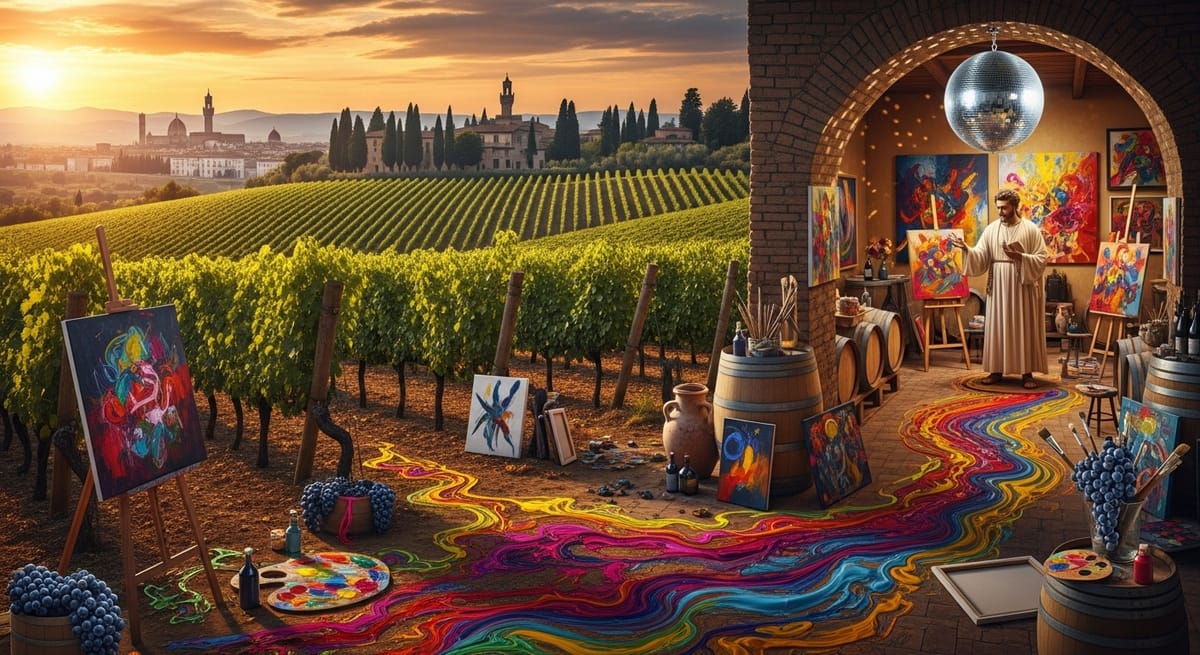
How a bohemian artist defied tradition, reimagined Tuscan wine, and created some of the most exciting bottles of the modern era.
Prologue: A God’s Confession
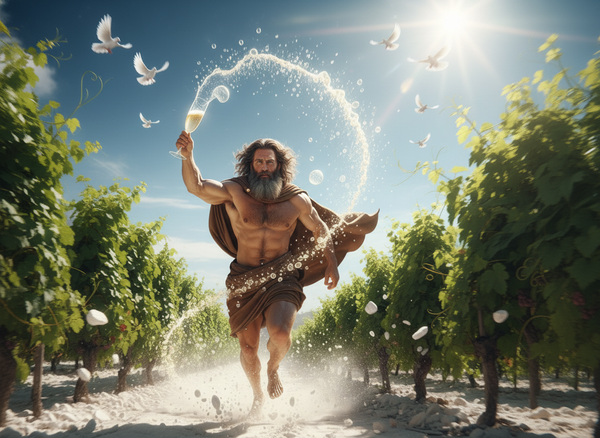
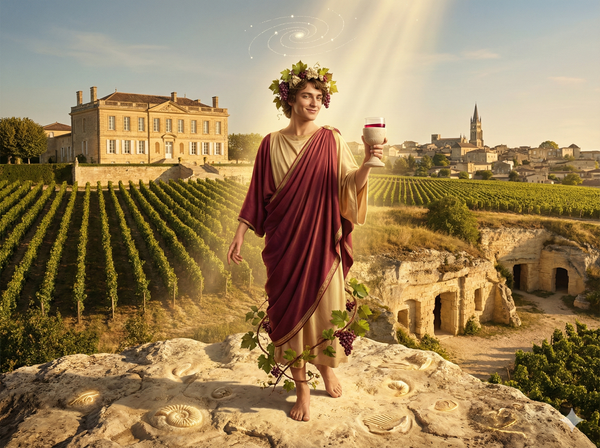
I have walked these hills for millennia. I’ve watched emperors plant vines for power, monks tend them for God, and families guard them for generations. But even I — Liber, god of wine and joyful chaos — rarely see someone so willfully, beautifully disobedient as Bibi Graetz.
He is not a winemaker who inherited legacy. He is not a farmer born to the vine. He is something rarer: a dreamer who painted his own mythology on the Tuscan hills. And in doing so, he changed the course of Italian wine.
Act I: The Artist
The story begins not in a vineyard, but in a Florentine studio, splattered with oil paint and sunlight. Bibi Graetz, born in 1973 to a Norwegian sculptor father and an Israeli artist mother, was destined for a life of art, not agriculture. He studied painting at Florence’s prestigious Accademia di Belle Arti, immersing himself in color, composition, and form.
Wine? That was just part of life — not a calling. The family owned a few old vineyards near the hilltop town of Fiesole, north of Florence, but they sold the grapes to others. Bibi barely paid attention.
But something stirred in him as he walked those steep, sunlit rows, where Sangiovese vines planted decades ago still clung to the hillside. He began to see the vineyards not as land, but as canvas. And wine, he realized, could be his most profound form of expression.
So, in 2000, with no formal oenological training and no grand estate behind him, Bibi made a decision that would define his life: he would become a winemaker. Or rather, he would become an artist whose medium was wine.
Act II: The Rebel
From the beginning, Bibi refused to follow the script. Tuscany — and especially Chianti Classico — was bound by rules and tradition. But Bibi? He had no interest in DOCG seals or centuries-old recipes. His mission was not to replicate the past but to create something that felt alive.
He sought out old, neglected vineyards on steep hillsides — often high-elevation plots planted with Sangiovese, Colorino, and Canaiolo — varieties that, in the right hands, could produce wines of thrilling energy and complexity. He favored massal selection over clones, intuition over formula.
Most scandalous of all, he ignored appellations. His flagship wine, Testamatta (Italian for “crazy head”), was labeled as a humble IGT Toscana — yet it quickly surpassed many of Tuscany’s most prestigious wines in critical acclaim and demand.
“Testamatta is my self-portrait,” Bibi once said. “It’s chaos and passion, color and soul. It’s everything I am.”
And so it was: pure Sangiovese, aged in large neutral barrels to preserve its freshness and precision, bursting with wild cherry, rose, herbs, and minerals. Elegant yet electric, it was unlike anything else in Tuscany — and it captured the imagination of wine lovers across the globe.
Act III: The Visionary
Bibi’s journey didn’t stop there. Each wine he created was a new chapter in his evolving story. Colore, his rare and deeply concentrated Sangiovese blend, became one of Italy’s most collectible wines. Soffocone di Vincigliata, controversial even in name, embodied sensuality and irreverence. And Bugia, his textured, old-vine Ansonica from the island of Giglio, proved that even white wine could be a vehicle for artistry.
His labels — painted by Bibi himself — became as iconic as the wines inside the bottle: bold, abstract explosions of color and motion, each one a reflection of the soul within. They weren’t branding. They were statements.
Today, Bibi Graetz is considered one of the most influential winemakers of his generation — a figure who helped redefine Tuscany’s identity in the 21st century. But he has never lost the restless curiosity that drove him from paintbrush to vineyard. “Wine,” he says, “is a painting you can drink. And every vintage is a chance to create something new.”
Epilogue: A God’s Benediction
I, Liber, delight in tradition — but I revel in rebellion. And Bibi Graetz is rebellion incarnate. He reminds humanity that wine is not just history in a bottle. It is also possibility. It is a conversation between creativity and nature, structure and chaos, discipline and abandon.
When I taste Testamatta, I taste not only fruit and soil but the wild joy of creation. I taste the courage to defy expectation. I taste the heartbeat of Tuscany — not as it was, but as it could be.
So I raise my cup to the painter who taught Sangiovese to dream. 🍷🎨
For in Bibi’s hands, wine does not merely express the land — it imagines it anew.
🪶 Final Words:
Some winemakers honor tradition.
Some rewrite the rules.
Bibi Graetz?
He paints with grapes — and the canvas is Tuscany itself.