The Resurrection of Bordeaux: The Story of Liber Pater
Discover the story of Liber Pater — Bordeaux’s most daring wine. From ungrafted vines and forgotten grapes to record-breaking bottles, explore how Loïc Pasquet resurrected the taste of pre-phylloxera France under the god of wine’s watchful eye.

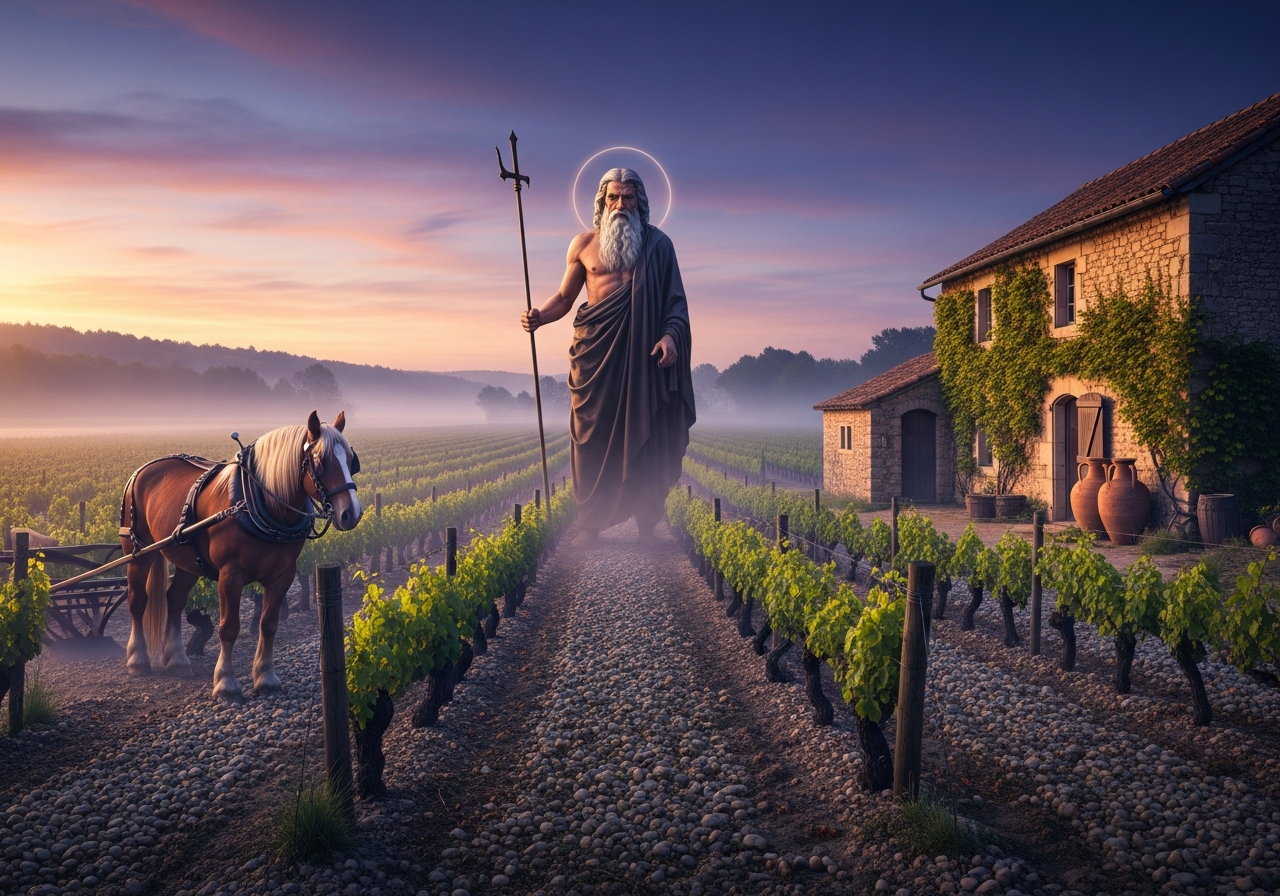
How one winemaker defied time, laws, and convention to pour ancient France back into a glass — under the watchful eye of the god who shares his name.
I. I Knew Him Before He Began
I have seen mortals name vineyards after saints, spirits, and stars — but rarely after gods.
When I heard that a man in Graves had called his estate Liber Pater, I did not take offense. I was curious.
For centuries, I have been the keeper of wine’s truest identity — not its luxury, but its memory.
So when Loïc Pasquet whispered to the earth and asked it to remember its pre-phylloxera past, I listened.
He was not trying to make Bordeaux famous again. He was trying to make it honest again.
And that, my friends, is divine work.
II. A Name Older Than the Vines
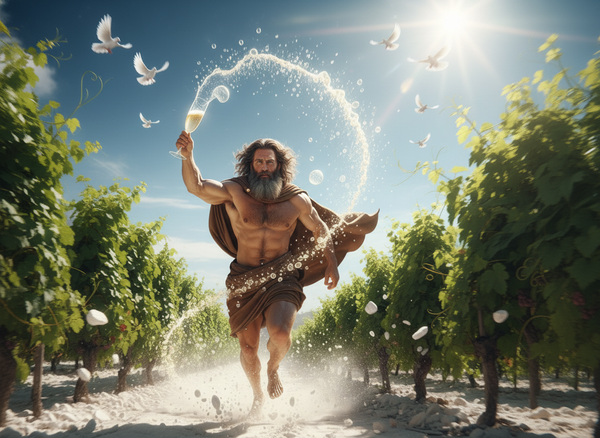
Before there was Dionysus or Bacchus, there was Liber Pater — the ancient Italic god of freedom, fertility, and the intoxicating liberation of the vine.
I was worshipped by farmers and philosophers alike — for I taught men not how to escape life, but how to taste it fully.
Loïc Pasquet understood this.
He chose my name not for vanity, but for rebellion — a reminder that wine’s purpose is not conformity, but communion.
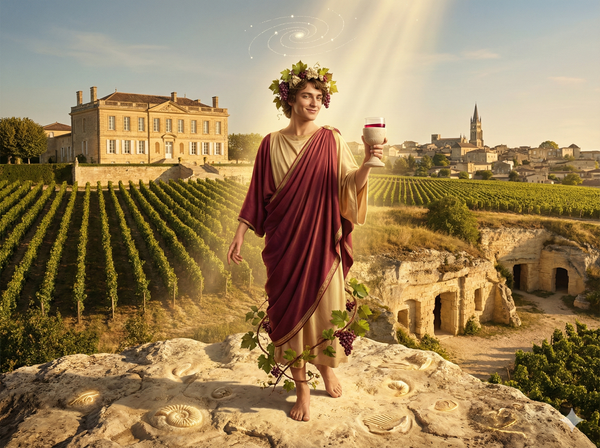
In 2006, in the quiet commune of Landiras in the Graves appellation, he founded Liber Pater, a vineyard built not to look forward, but to look backwards through time.
III. The Mission: To Resurrect Forgotten Bordeaux
To understand the madness — or brilliance — of Liber Pater, you must understand what Loïc sought to do.
He asked a forbidden question:
“What did Bordeaux taste like before phylloxera?”
That plague of the 19th century had destroyed Europe’s native vines, forcing growers to graft their roots onto American stock — saving their vineyards, yes, but changing their identity forever.
Loïc wanted to undo that.
He began replanting ungrafted, indigenous grape varieties — some extinct, others banned — to recreate the wines of pre-industrial Bordeaux.
These included Castets, Tarney-Coulant, Saint-Macaire, and others forgotten by modern regulations.
He broke rules, defied the INAO, and nearly lost his classification.
But as I, Liber, know — true faith always looks like heresy in its first act.
IV. The Place: Gravel, Sand, and Memory
Liber Pater’s vines grow in Landiras, within the southern stretches of Graves — a name that literally means “gravel.”
The soil here is a mosaic of sand, clay, and pebbles, formed by ancient riverbeds that once fed the Garonne.
It drains quickly, forcing vines to reach deep — to struggle, to remember.
The vineyards are tiny: just 2.5 hectares, cultivated like a garden.
Every vine is tended by hand; every grape picked with surgical care.
Plough horses replace tractors, as they once did centuries ago.
No clones, no irrigation, no chemicals.
Only the quiet hum of insects and the whisper of the wind over the gravel.
It is not viticulture — it is resurrection.
V. The Winemaking: A Dialogue with the Dead
In the cellar, Loïc Pasquet continues his act of resurrection.
He uses amphorae and neutral oak barrels, preferring clay to steel — an ancient method that lets the fruit, not the vessel, tell its story.
He ferments with wild yeasts, eschews filtration, and bottles with almost monastic minimalism.
Even the labels are spare — the name, the vintage, nothing else.
Each bottle is less a product and more a manifesto.
And the result? Wines of haunting complexity — deep, earthy, electric, alive.
They taste of graphite, truffle, and smoke — the texture of an idea that has been buried and dug up again.
VI. The Price of Purity
Because he refused to compromise, Loïc Pasquet paid a price.
Regulators fined him, critics dismissed him, and competitors called him a fraud.
For a time, the AOC stripped his right to use the Graves name on his labels.
And yet, as always happens when truth meets defiance — the world came back to listen.
When Liber Pater 2015 was released at €30,000 per bottle, it became the most expensive wine in the world.
Not because of its rarity alone, but because of what it represented: a return to origins, an act of devotion disguised as defiance.
I, Liber, smiled when I heard it.
For once again, mortals had mistaken faith for folly — and time proved them wrong.
VII. The Taste of Time
To taste Liber Pater is not to drink Bordeaux as we know it.
It is to taste the shadow of Rome, the breath of forgotten vines, the hum of soil unbroken by machines.
The reds are fine-boned yet muscular, vibrating with life — black fruit laced with herbs and iron.
The whites (yes, there are whites) are crystalline, saline, and full of ancient light.
Each sip feels like a conversation with centuries — a reminder that wine is not made by chemistry, but by continuity.
VIII. The Philosophy: Freedom Through Fidelity
Loïc Pasquet’s motto could easily be mine: libertas per radices — freedom through roots.
In resurrecting the past, he was not rejecting modernity; he was reminding it of its source.
To make Liber Pater is to practice archaeology by taste — to believe that memory can ferment, that history can breathe again.
It is not nostalgia. It is faith — faith that what was lost can still be reborn if one listens closely enough.
IX. Liber’s Reflection: The Divine Mirror
When I look upon this estate that bears my name, I see a mirror of myself — flawed, defiant, devoted to renewal.
Loïc Pasquet is not a winemaker. He is a conjurer, a heretic priest of the vine.
He understands that the truest act of creation is not invention, but remembrance.
His work is proof that Bordeaux still dreams, that even in its strictest châteaux, there lingers a spark of divine anarchy.
And that spark, dear reader, is me — the ancient god of wine and rebellion, still walking among the vines.
🍷 Final Benediction
Some wines are born to please.
Liber Pater was born to remember.
In every glass, the past rises — unfiltered, untamed, unforgettable.
And I, Liber, drink to that: the taste of eternity restored.