The Silence of the Earth: Romanée-Conti 1945
A lyrical exploration of Romanée-Conti 1945 food pairing — vegetarian elegance, truffle pasta, and the soul of Burgundy in a single glass.

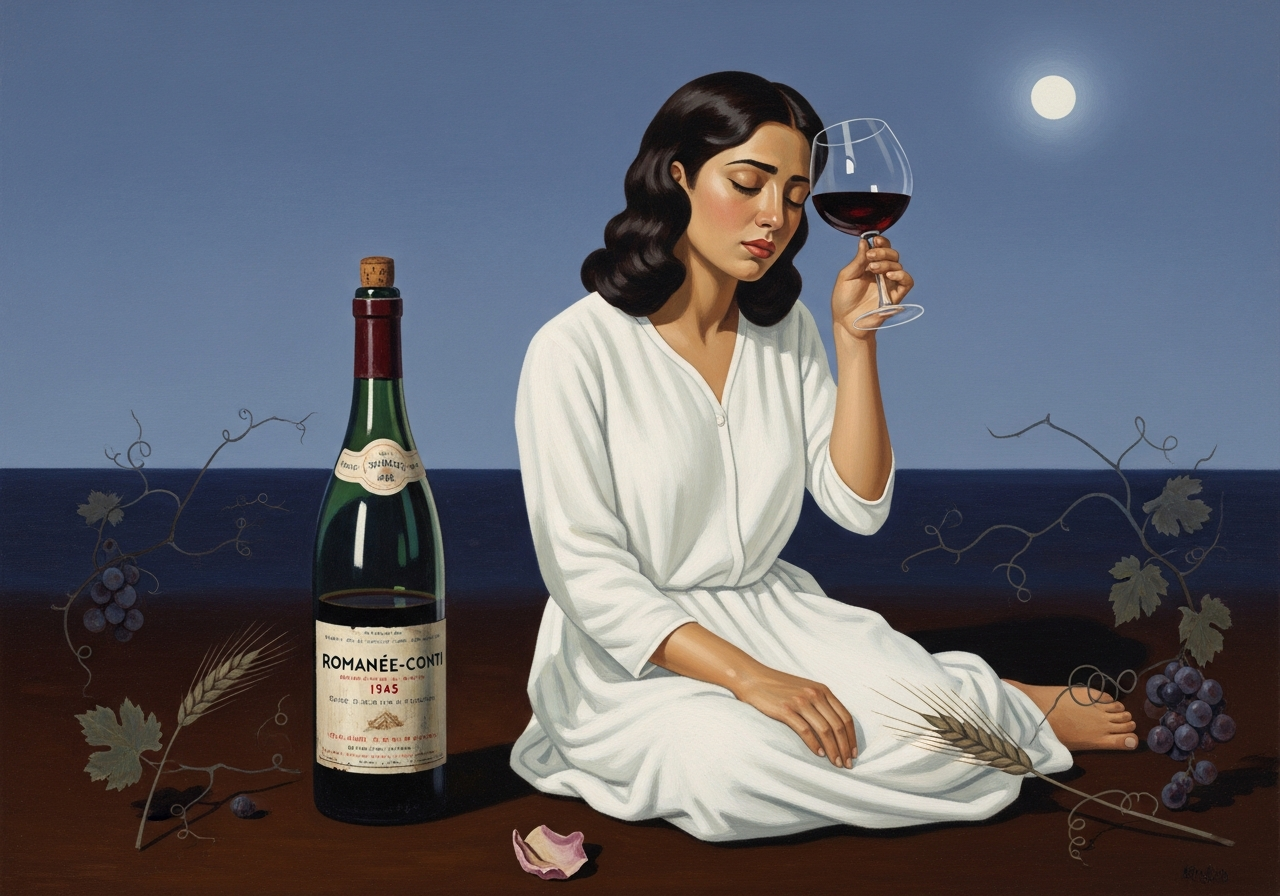
It is a strange hush that meets the cork of an old Romanée-Conti—the silence of time exhaled. The 1945, last of the pre-modern age, opens with the soft sigh of a legend waking. Its color, still deep garnet but edged in sunset amber, seems to hold the soil of Vosne-Romanée itself—iron-tinged and luminous. A gentle splash-decant, no more than twenty minutes, is all this wine can bear before its fragile symphony disperses. Poured at 17 °C into a wide Burgundy bowl, the air around it blooms with scents that defy linear description: truffle and rose petal, dried strawberry and cedar dust, the faint echo of smoke after rain.
Born from Scarcity and Soil
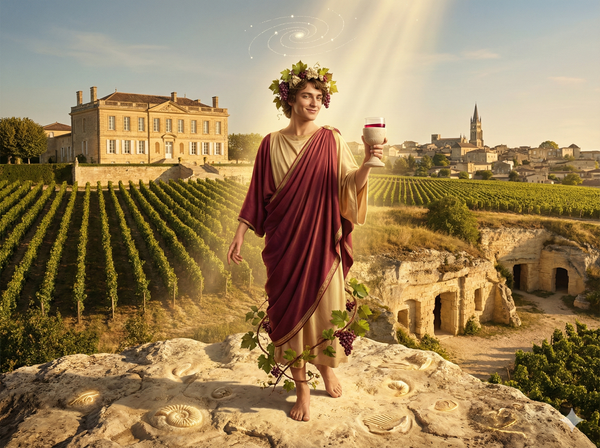
This wine’s birthplace is the hallowed vineyard of Romanée-Conti in Vosne-Romanée, Burgundy, France—a 1.8-hectare monopole of the Domaine de la Romanée-Conti, planted almost entirely to Pinot Noir on thin limestone and clay over oolitic rock. The domaine’s ethos is monastic: meticulous handwork, soils tilled by hoof and hand rather than herbicide, organic methods with biodynamic sympathies, and yields kept painfully low so that place speaks before technique. The 1945 vintage, emerging from the final year of the war, yielded heartbreakingly few bottles—berries small and thick‑skinned after a season of heat and scarcity. Under the steady eye of the de Villaine family, the vines spoke of survival. This is Burgundy distilled to its mineral heart, where restraint and farming conscience become flavor.
The Wine’s Identity: Earth, Time, and Pulse
The first breath carries wild strawberry, sous-bois (the forest floor scent of decaying leaves and cool earth), and something almost savory—game, smoke, a suggestion of autumn broth. On the palate it moves like silk drawn over stone: tannins so fine they feel like memory, acidity still bright enough to wake the tongue. There is sweetness without sugar, the sweetness of faded fruit in perfect balance with the salt of the soil. Every great Burgundy seeks transparency; 1945 Romanée-Conti achieves revelation. Its finish lingers as if written in air—minute after minute of echo, then calm.
Though the wine is nearly eight decades old, its structure endures. It is vivid now, ghostly by 2035, and immortal in recollection. The oak, long absorbed, lends a whisper of spice rather than a frame. This is not power—it is persistence, the way a story told once can live forever.
The Food That Speaks Its Language
Roast, Fat, and Fire
The Romanée-Conti 1945 is no companion for noise or flamboyance. Its grace needs the hush of a single dish prepared with respect. A slow-roasted pigeon—flesh ruby, skin crisped with thyme and salt—mirrors the wine’s duality of delicacy and depth. The gentle game flavor draws out the Pinot Noir’s earthy core, while the bird’s rendered fat softens what remains of its tannin, turning structure to silk. The same alchemy occurs with a tender lamb loin, roasted pink and brushed with rosemary oil: herb meets herb, sap meets sap, the meat’s sweetness echoing the wine’s fading fruit. The char of the roast creates a bridge to the wine’s tertiary smoke—a perfect whisper between eras.
Earth’s Larder
A wine this subtle deserves vegetarian dishes that honor its forest-and-flower register rather than bludgeon it with umami. Consider salt‑baked beetroot, peeled and still warm, sliced over hazelnut brown butter with a prickle of redcurrant or blackcurrant jus. The beets’ gentle sweetness coaxes the wine’s faded strawberry while the nuts and butter give the tannin—tannin being that gentle, drying grip—something to bind. Or fold a morel-and-truffle fricassée into delicate semolina gnocchi: the mushrooms echo the sous‑bois without tipping the wine into bitterness, while the gnocchi’s silk and a final veil of aged Comté provide fat and salt to cradle the acidity. This is how soil greets soil—root to limestone, perfume to leaf.
Small Indulgences
On the side, one might serve pommes Anna, those crisp, buttery petals of potato that dissolve on the tongue just as the wine’s last note fades. Or a jus reduced from wild mushrooms and a drop of aged balsamic, whose sharp-sweet tension mirrors the wine’s own long equilibrium. These are not decorations but continuations of the same melody.
The Goddess in the Glass
When I, Geshtinanna, first descended to the underworld, I learned that memory ferments like wine—it darkens, it deepens, it reveals. This Romanée-Conti 1945 is such a relic: the dream of Burgundy made flesh, then spirit. Each sip is a resurrection, the vine’s quiet defiance of mortality. I have seen countless vintages pass, but few that contain the gravity of both ending and beginning.
Wine like this demands presence. It does not ask to be drunk but to be heard. Pour it slowly, breathe with it, and let its final whisper become your own heartbeat. Then share it with one other soul only—someone who listens as much as they taste. For such a wine is not a beverage; it is communion between earth and air, between what lives and what remains.
And when the last drop is gone, leave the empty glass where moonlight can find it. The scent that lingers is the true finish—the perfume of limestone and memory, of human hands and divine patience. In that quiet, you will understand why the gods gave us the vine: not for celebration, but for remembrance.