THE VINE THAT REFUSED TO WAIT ITS TURN

How Billecart-Salmon Became Champagne’s Most Elegant Rebel
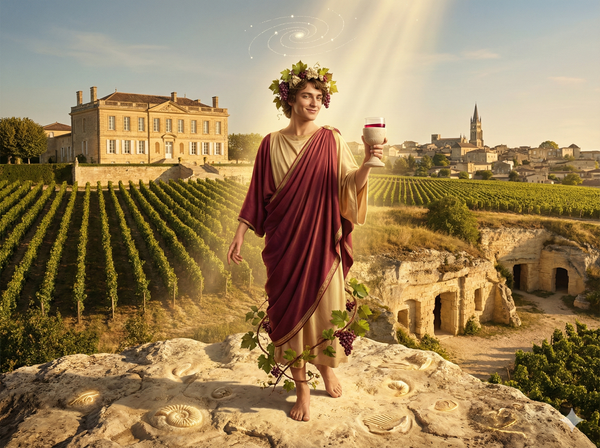
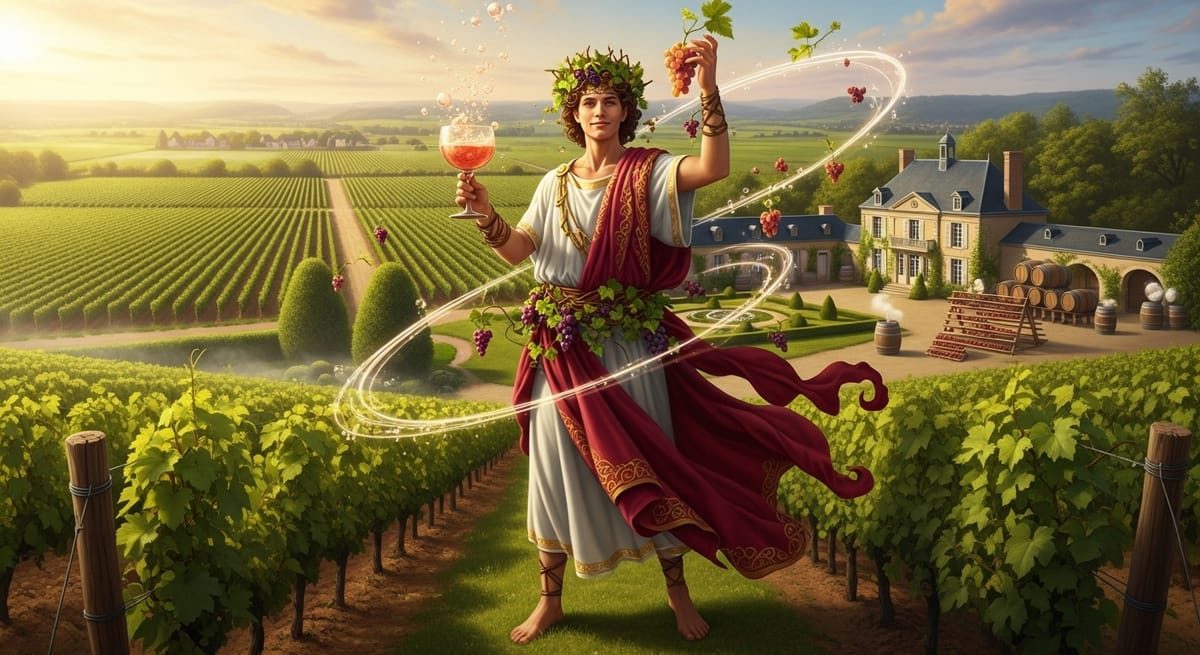
A history uncorked by Liber—god of the vine, mischief, metamorphosis, and all things that bubble beneath the surface.
Prologue: When the Grapes First Stirred
Every great house of Champagne begins with a spark—an impulse, a longing, a flicker of rebellion rising through the rows of vines. And in 1818, in the modest village of Mareuil-sur-Aÿ, a young man felt such a stirring.
His name was Nicolas François Billecart.
His fate was a woman named Elisabeth Salmon.
And their union—bright, determined, slightly audacious—became Billecart-Salmon.
You know me: I adore a marriage born of both passion and practicality. The pairing of a talented winemaker and a family with deep viticultural roots? Divine. It is exactly the kind of alchemy that sets vines humming at night.
The First Ferments: A House Built on Finesse
Even in its infancy, the House of Billecart-Salmon stood apart. While many Champagne producers chased intensity, volume, and overt power, Nicolas championed a different doctrine:
“Finesse. Freshness. Balance.”
These were the watchwords of a man who believed Champagne should not overwhelm—it should seduce.
And so the house focused on:
- Cold fermentation (a technique well ahead of its time), preserving delicate aromas.
- Small, slow vinifications by parcel and by variety.
- An uncompromising pursuit of elegance over sheer force.
In a region of booming maisons, Billecart-Salmon chose precision rather than pomp, refinement rather than spectacle.
I approve of such restraint—it is often the quietest mastery that endures.
The Salmon Lineage: A Family That Does Not Break
From the marriage came a dynasty. One century, then another, then another—seven generations, each tending the vines with a kind of devotional steadiness that even I, Liber, consider impressive.
Through revolutions, phylloxera plagues, two world wars, and the chaotic swings of the market, the family did something radical:
They held on.
This is no small miracle. Many Champagne houses have changed hands—absorbed by corporations, investors, or larger maisons. But Billecart-Salmon remained fiercely family-owned throughout its history.
A vine that chooses its own trellis grows straighter.
A Turning Point in 1958: The Vintage That Changed Everything
And then came the vintage that rewrote the story.
In 1958, brothers Jean and François Roland-Billecart launched a cuvée that would become legendary:
Cuvée Nicolas François Billecart
A tribute to the founder.
A Champagne of extraordinary finesse.
A creation aged a decade or more, crafted with meticulous attention.
In 1999—more than forty years later—this very cuvée stunned the wine world when the 1958 vintage was crowned “Champagne of the Millennium” in a blind tasting of 150 top cuvées.
Yes. You read correctly:
The very first vintage of the house’s prestige cuvée was deemed the greatest Champagne of the 20th century.
Now that is what I call divine timing.
A Rose for the Ages: The Birth of a Legend
But if there is one creation that carries the unmistakable imprint of passion, it is the house’s most adored bottle:
Brut Rosé Billecart-Salmon
Pale, precise, ethereal—the kind of rosé that doesn’t merely flirt; it bewitches.
When critics speak of rosé Champagne, they often invoke Billecart-Salmon’s name with a reverence usually reserved for temples or lovers. The house did not invent rosé Champagne, but they perfected the delicate pale style that countless others now emulate.
Even I, Liber, patron of wild and fervent wines, bow to its subtlety.
The Chalk, the Craftsmen, the Cellars of Patience
To know Billecart-Salmon is to appreciate:
- The vineyards, spread across 100 hectares with prized holdings in the Montagne de Reims, Côte des Blancs, and Vallée de la Marne.
- The chalky subsoil, a natural cathedral of coolness that keeps the bubbles lively and bright.
- The slow, extended ageing, often far beyond the region’s requirements, carving elegance into the wine with time’s steady hand.
- The blend-focused philosophy, treating every parcel as a distinct voice in the final chorus.
- The famously low-temperature fermentations, which define the airy signature of the house.
This is Champagne not made for haste, noise, or spectacle.
This is Champagne made for poetry.
Into the Present: A Renaissance, Not a Reinvention
Today, under the guidance of Mathieu Roland-Billecart, the house thrives. Modern tools support ancient intuition. Parcels are studied with almost spiritual devotion. Sustainability is pursued not for marketing, but for posterity.
The portfolio now shines with:
- Brut Réserve
- Extra Brut
- Brut Nature
- Vintage Cuvées
- Blanc de Blancs
- Sous Bois (a masterwork of oak fermentation)
- Elisabeth Salmon Rosé
- Louis Salmon Blanc de Blancs
- Cuvée Nicolas François Billecart
- And that shimmering, beloved rosé
It is a house that has preserved its soul.
And how rare that is.
Liber’s Closing Toast
Every Champagne tells a story.
But Billecart-Salmon tells a lineage—of devotion, precision, patience, and quiet rebellion. It is a house that never sought dominance, never ballooned beyond its nature, never lost sight of the delicate art of balance.
Instead, it chose excellence.
And excellence ages well.
So raise your glass high, let the bubbles race upward like a hymn in motion, and know this:
Some wines intoxicate the senses.
Billecart-Salmon intoxicates history.
— Liber