When the Vine Returns from the Underworld: Sadie Family Wines Columella 2018
A Geshtinanna-led meditation on Sadie Family Wines Columella 2018, with rare, plant-forward pairings and service insight. Sadie Family Wines Columella 2018 food pairing

When the Vine Returns from the Underworld: Sadie Family Wines Columella 2018
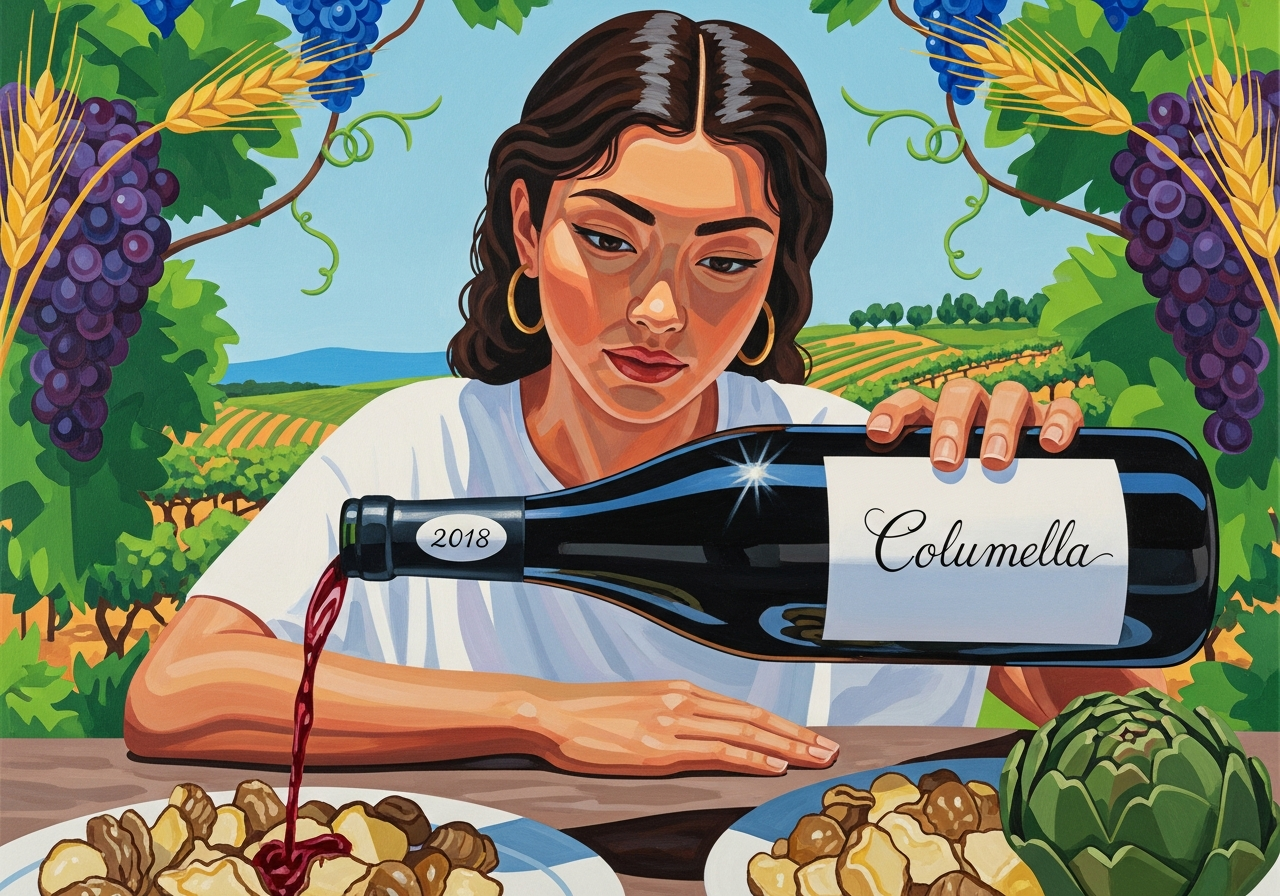
I pour Columella as the year exhales and gathers itself again. This is the moment I know best: the hinge between descent and return. I let the wine breathe for an hour in a broad glass vessel, not to tame it, but to wake it. Serve it cool, around 16–17 °C, in a generous bowl that honours movement and air. Columella does not rush. It remembers where it has been.
I am Geshtinanna, keeper of the vine and recorder of thresholds. I have walked out of darkness often enough to know which wines understand renewal. This is one of them.
Where the Vine Learns to Speak
Columella 2018 is born in South Africa, in the Swartland, where Eben Sadie tends old, dry-farmed vineyards under punishing sun and merciful wind. The wine is a field blend led by Syrah, supported by Mediterranean companions, drawn from granitic, schistous, iron-laced soils. Farming here is organic in practice, guided by biodynamic rhythm and restraint rather than proclamation. The climate is stark, the soils honest, and the vines respond with clarity.
I have always believed the vine remembers who listens. In the Swartland, listening is survival.
The Shape of the Year in the Glass
The 2018 vintage carries composure. The colour is deep garnet, luminous but not opaque. On the nose, it opens slowly: violets crushed between fingers, black olive brine, cured meat without heaviness, white pepper, and the scent of warm stone after rain. On the palate, the wine moves with tension and grace. Tannin arrives as a fine, steady grip, like parchment drying between the palms. Acidity keeps the line taut. Alcohol never shouts.
Biodynamic practice leaves no halo, only texture. There is an inner vibration here, a sense of alignment. I recognise it from the old stories: when the cycle is respected, the result is calm strength.
Columella does not perform. It endures. Drink it now with air and patience, or follow it into the next decade as it trades floral lift for tea leaf, leather, and deeper earth. I would not hurry it before 2030, nor fear it after 2038.
Pairings for Those Who Have Walked the Long Way
This wine asks for food that has also known time, pressure, and intention. Not the obvious matches. Not the loud ones.
I begin with a dish of slow-roasted Jerusalem artichokes, split and browned until their sugars deepen, served with cultured butter browned to hazelnut and scattered with toasted rye crumbs. The artichoke’s subterranean sweetness mirrors the wine’s savour, while bitterness at the edges sharpens the line of acidity. The rye brings grain and earth, softening tannin without muting it.
There is a reason I favour roots. They understand descent.
Next, I turn to smoked lentils cooked until just tender, finished with black garlic and a restrained gloss of olive oil. The smoke resonates with Columella’s mineral undertow; the lentils provide protein to quiet the tannin’s grip. Black garlic, sweet and umami-rich, finds harmony here because the wine has tension enough to hold it. This is a pairing built on balance, not indulgence.
For the centre of the table, I favour a dish of braised radicchio and cavolo nero, slowly wilted with shallot and a splash of aged vinegar, then finished with crushed walnuts. The bitterness lifts the wine’s peppery spine; the nuts echo its quiet density. Acidity meets acidity, and neither flinches.
If the night is cold, I add grilled polenta cut thick and charred hard, topped with a purée of roasted red peppers and anchovy-free salinity from capers rinsed and chopped fine. The polenta absorbs, the char reflects, the wine steadies everything it touches.
I speak rarely of meat, but culture sometimes insists. If it must appear, let it be a whisper: a single mention of lamb, slow and restrained, would not offend this wine. But it is unnecessary. Columella has always been more about land than flesh.
To close, I choose not sweetness but resolution: a wedge of aged sheep’s milk cheese, firm and nutty, shaved thin. Salt unlocks the finish, and the wine lengthens, unhurried, as if setting down its pack after a long road.
On Returning
I have spent half my life below ground, recording names and seasons, waiting for the vine to rise again. Wines like Columella understand that rhythm. They do not chase the moment. They honour it.
Decant with intention. Keep the temperature cool enough for clarity. Use glass that allows the story to unfold. This is a wine for the turning of years, for tables where plants are treated as elders, not sides.
When you drink it, remember this: endurance is not severity. It is patience, rewarded.